The Ultimate Guide to Train Travel in Italy
Figuring out transportation in a foreign country can be overwhelming, but if you’re traveling in Italy, there’s a clear winner: trains.
Italy’s extensive rail network connects major cities, charming small towns, and picturesque countryside, making it one of the fastest, most budget-friendly, and scenic ways to explore the country.
With high-speed options for cross-country journeys and regional trains for hidden gems, Italy’s rail system is convenient, efficient, and more environmentally friendly than driving or flying.
Once you get the basics down, navigating the system is a breeze.
Let’s break it all down so you can master train travel in Italy with ease.
Short on Time? Here are the key takeaways:
- Italy’s train system is the fastest, easiest, and most affordable way to travel between major cities and small towns.
- Trenitalia covers both regional and high-speed routes, while Italo operates only high-speed trains between big cities.
- Book early for high-speed trains to save money, and remember that regional paper tickets must be validated before boarding.
- Use the Trainline app for easy booking, real-time updates, and digital tickets, especially if you prefer everything in English.
- Always check departure boards for your train number, not just the destination, and watch for strikes, delays, or last-minute platform changes.
Boozing Abroad contains affiliate links throughout the site. If you choose to purchase items through these links, we will earn a small commission at NO extra cost to you. Read the full disclosure policy here**
Understanding Italy’s Train System
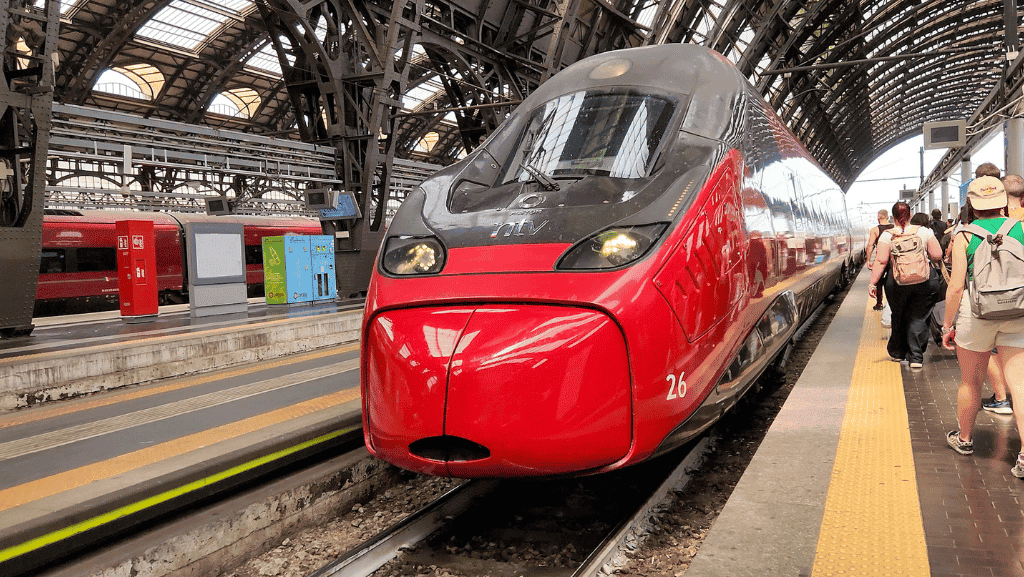
Italy has two main train operators:
1. Trenitalia (State-Run)
Trenitalia is Italy’s national railway company, operated by the state-owned Ferrovie dello Stato Italiane. It offers both high-speed and regional services, making it the most comprehensive option for getting around.
Train Types:
- Frecciarossa (Red Arrow): The fastest and most luxurious high-speed trains, reaching up to 300 km/h (186 mph). These connect major cities like Rome, Milan, Florence, Venice, and Naples.
- Frecciargento (Silver Arrow): High-speed trains that also run on conventional tracks, offering a balance between speed and connectivity.
- Frecciabianca (White Arrow): A slightly slower but comfortable option connecting medium-sized cities and coastal destinations.
- Intercity: Comfortable trains connecting major and minor cities with more frequent stops.
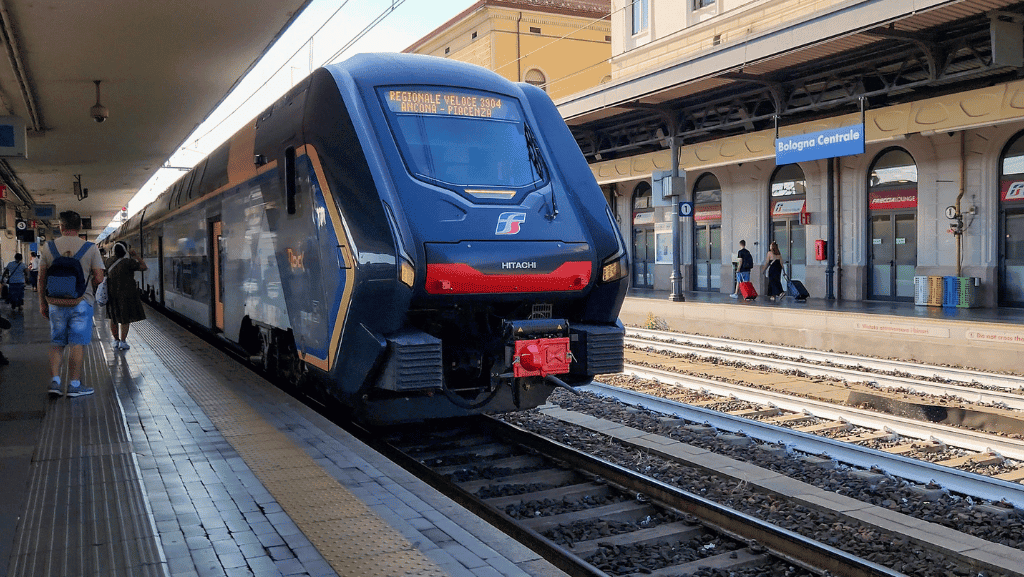
- Regionale & Regionale Veloce: Slower, budget-friendly trains serving small towns and rural areas. Ideal for local adventures but don’t expect luxury.
2. Italo (Private High-Speed Operator)
Italo is a private train company specializing in high-speed travel between Italy’s biggest cities. It doesn’t operate regional trains, so if you’re heading off the beaten path, you’ll need Trenitalia.
Train Types:
- Italo AGV: The fastest Italo trains, reaching speeds of 360 km/h (224 mph).
- Italo EVO: A newer, eco-friendly high-speed train designed for efficiency and comfort.
Key Differences Between Trenitalia & Italo:
| Feature | Trenitalia | Italo |
| Coverage | Nationwide, including regional and high-speed routes | High-speed routes only |
| Train Types | Frecciarossa, Frecciargento, Frecciabianca, Intercity, Regionale | Italo AGV, Italo EVO |
| Booking Options | Website, app, station, third-party sites | Website, app, station, third-party sites |
| Classes of Service | Standard, Premium, Business, Executive | Smart, Prima, Club Executive |
| Loyalty Program | CartaFRECCIA | Italo Più |
Train Classes & Comfort Levels
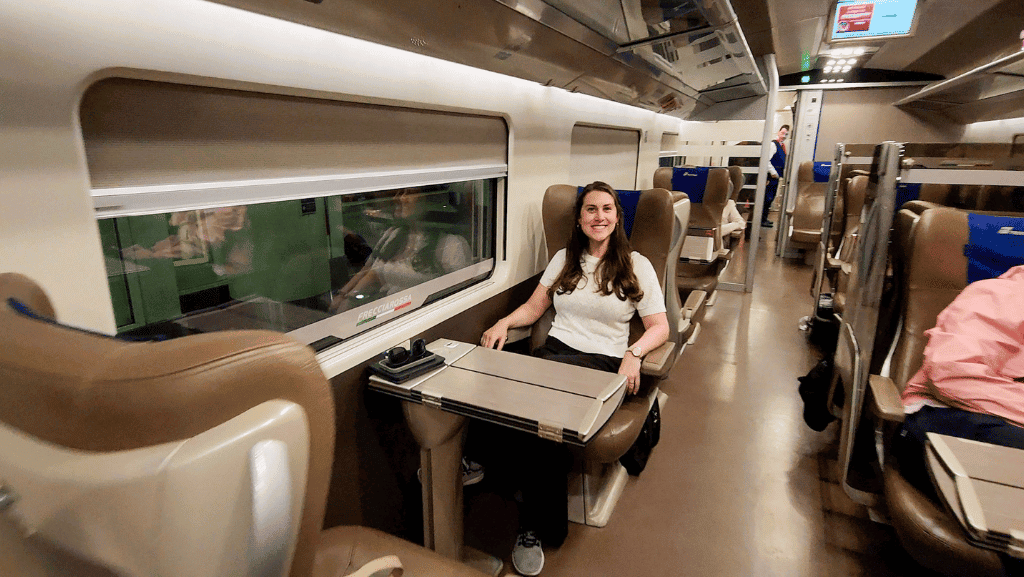
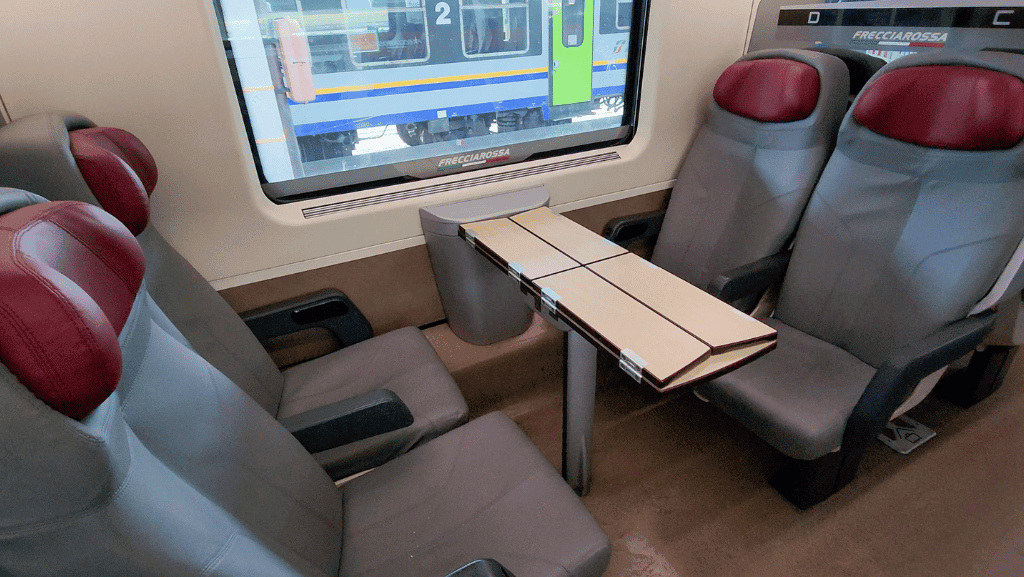
| Train | Class Type | Details |
| Trenitalia | Standard | Basic seating, good for budget travelers. |
| Premium | More legroom, quieter coaches, complimentary drinks. | |
| Business | Larger seats, lounge access in select stations. | |
| Executive | Luxury seating, meal service, and VIP lounge access. | |
| Italo | Smart | Budget-friendly but still comfortable. |
| Prima | Wider seats, complimentary drinks, priority boarding. | |
| Club Executive | Luxury experience, reclining leather seats, food service. |
How to Book Train Tickets in Italy
Online Booking
- Trenitalia: Book via the Trenitalia website or app.
- Italo: Book via the Italo website or app.
- Third-party options: Trainline allows you to compare fares across operators
Buying at the Station
- Use self-service kiosks (available in multiple languages) or ticket counters.
- Pro Tip: For regional trains, avoid long lines by using a kiosk.
Ticket Types & Pricing
- High-speed trains: Prices vary based on demand. Book early to get the best fares (Super Economy & Economy tickets offer significant discounts).
- Regional trains: Fixed prices – no need to book early.
Trainline App
When it comes to booking train tickets in Italy, we almost always use Trainline – a super convenient app that lets you compare, book, and manage tickets across different rail companies in one place.
Whether we’re hopping on a high-speed Italo train to Rome or taking a regional Trenitalia route through the countryside, Trainline makes the whole process smooth and stress-free.
Why We Love Trainline
- All-in-One Booking: Instead of juggling multiple websites, Trainline pulls together tickets from Trenitalia, Italo, and other European rail operators so you can compare prices and schedules in seconds.
- Real-Time Updates: The app gives live train times, platform numbers, and delay notifications, which is a game-changer – especially in busy stations where announcements aren’t always clear (or in English).
- Mobile Tickets = No Printing Hassles: Most tickets are digital, meaning we never have to worry about finding a printer or validating a paper ticket before boarding.
- Easy Price Comparison & Discounts: Trainline highlights the cheapest fares, including Super Economy and Economy tickets for Trenitalia or discounted Smart fares for Italo. Plus, you can pay in multiple currencies using PayPal, Apple Pay, or a credit card.
- Seat Selection & Ticket Flexibility: On some routes, you can choose your seat in advance, and depending on your ticket type, make changes if your plans shift.
A Couple Things to Keep in Mind
- Small Booking Fees: Unlike booking directly through Trenitalia or Italo, Trainline charges a tiny service fee. For us, the convenience is worth it, but if you’re on a tight budget, it’s something to consider.
- Regional Train Tickets May Require Validation: When using the Trainline app, your ticket is automatically validated in the app at the departure time of your ticket. We love this feature and it definitely gives us peace of mind.
Is Trainline Worth It?
For us, 100% yes. The ability to book trains in English, get real-time updates, and manage all our tickets in one place makes Trainline our go-to app for train travel in Italy.
If you’re planning to explore the country by rail, this app will save you time, confusion, and – more often than not – some money too. Click here to download the app.
Essential Train Travel Tips
Italian Train Vocab
If you want to buy the tickets in person, most of the time the person will be able to speak some English, but in any event, it’s always a good idea to have some vocab just in case.
Familiarize yourself with these Italian words to make navigating train stations easier:
- Platform: Binario
- Ticket(s): Biglietto(i)
- Train: Treno
- Station: Stazione
- Coach / Carriage: Carrozza
- Regional: Regionale
- High-Speed: Alta Velocità
Buying Tickets & General Questions
- Dove posso comprare un biglietto? – Where can I buy a ticket?
- Vorrei un biglietto per [destination], per favore. – I would like a ticket to [destination], please.
- C’è uno sconto per studenti/senior? – Is there a discount for students/seniors?
- Qual è il prossimo treno per [destination]? – What is the next train to [destination]?
- C’è bisogno di prenotare il posto? – Do I need to reserve a seat?
- Qual è il binario per il treno per [destination]? – Which platform is the train to [destination] on?
At the Train Station
- Dove si trova la biglietteria? – Where is the ticket office?
- C’è una macchina per i biglietti? – Is there a ticket machine?
- Dove posso convalidare il biglietto? – Where can I validate my ticket?
- Il treno per [destination] è in orario? – Is the train to [destination] on time?
- Il treno è in ritardo? – Is the train delayed?
- Quanto dura il viaggio per [destination]? – How long is the trip to [destination]?
On the Train
- Questo posto è libero? – Is this seat free?
- Dove posso mettere la mia valigia? – Where can I put my suitcase?
- Quando arriva il treno a [destination]? – When does the train arrive in [destination]?
- Mi può dire quando arriviamo a [destination]? – Can you tell me when we arrive in [destination]?
- C’è il Wi-Fi sul treno? – Is there Wi-Fi on the train?
Problems & Emergencies
- Ho perso il mio treno. Cosa posso fare? – I missed my train. What can I do?
- Posso cambiare il mio biglietto? – Can I change my ticket?
- Mi hanno rubato la borsa! – My bag was stolen!
- Dov’è l’uscita? – Where is the exit?
- Dov’è il bagno? – Where is the bathroom?
Major Train Stations
This table highlights the busiest train stations in Italy, detailing their locations and key features.
From major transportation hubs like Roma Termini to important regional connectors, these stations serve millions of passengers annually and provide access to high-speed, regional, and international trains.
| City | Station Name | Info |
| Rome | Roma Termini | The largest and busiest train station in Italy, handling over 150 million passengers per year. It’s the main hub for high-speed trains, regional routes, and international connections. |
| Milan | Milano Centrale | A grand station serving over 120 million passengers annually. It’s a key hub for Frecciarossa, Italo, and international trains to Switzerland, France, and Germany. |
| Naples | Napoli Centrale | Southern Italy’s busiest station, connecting travelers to Pompeii, the Amalfi Coast, and Sicily, plus high-speed routes to Rome and Milan. |
| Florence | Firenze Santa Maria Novella | The main station in Tuscany, serving over 59 million passengers each year. A key stop for tourists visiting Florence, Pisa, and Siena. |
| Turin | Torino Porta Nuova | Northern Italy’s second-largest station, with high-speed connections to Milan, Rome, and Paris. Over 70 million people pass through annually. |
| Bologna | Bologna Centrale | A major high-speed rail hub, linking northern and central Italy. This station also has an underground section for Frecciarossa and Italo trains. |
| Venice | Venezia Santa Lucia | The main station in Venice, sitting right on the Grand Canal. It’s the primary gateway for tourists arriving by train to the famous lagoon city. |
| Verona | Verona Porta Nuova | A critical stop for travelers visiting Verona, Lake Garda, and the Dolomites. It’s also a key link for trains between Milan, Venice, and Austria. |
| Genoa | Genova Piazza Principe | The busiest station in Liguria, connecting travelers to Cinque Terre, the French Riviera, and northern Italy. |
Validating Your Ticket (Regional Trains – Paper Only!)
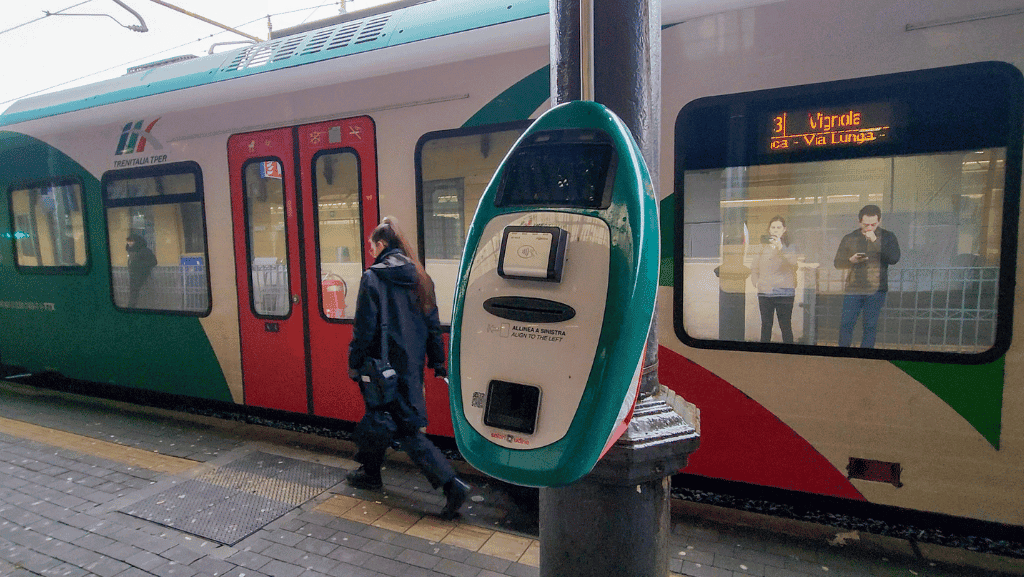
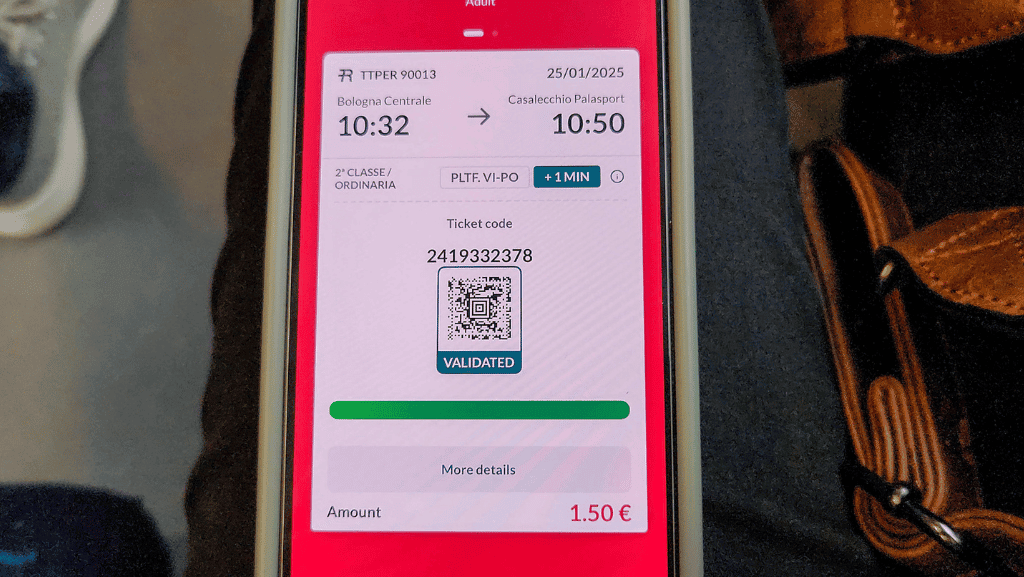
If you have a paper ticket for a regional train, you must validate it at the yellow stamping machines in the station before boarding to avoid fines.
As mentioned earlier, the Trainline app will do this for you if you purchase through them. Otherwise, you will need to validate it.
Be on Time!
High-speed trains leave exactly on schedule. If you miss your train, you may have to buy a new ticket.
That being said, train delays in Italy are common, especially with regional trains, so don’t be surprised if your departure time gets pushed back.
However, the unpredictable nature of delays means that sometimes trains actually arrive earlier than expected – yes, it happens!
To avoid missing your ride, it’s always best to be near the station well before your scheduled departure. Keep an eye on real-time updates through the Trenitalia or Italo app, but don’t stray too far.
Grab a coffee or aperitivo nearby, but stay within walking distance so you’re ready to board as soon as your train shows up.
Watch for Train Strikes (Sciopero)
Trenitalia workers go on strike more often than you’d think, especially in peak travel seasons.
Train strikes (scioperi) are common in Italy due to ongoing labor disputes, union negotiations, and protests against working conditions, wages, or government policies.
The Italian labor system allows unions to schedule strikes well in advance, often affecting public transportation, including trains. While strikes can be disruptive, they are usually announced ahead of time, giving travelers a chance to plan accordingly.
What to Do If You’re Impacted by a Train Strike
- Check Strike Schedules in Advance – Strikes are typically announced weeks ahead. You can check the official websites of Trenitalia and Italo or the Italian Ministry of Transport’s website for upcoming strikes.
- Know the Guaranteed Travel Hours – Even during strikes, essential train services usually run during “fascia di garanzia” (guaranteed time slots), typically between 6:00-9:00 AM and 6:00-9:00 PM to ensure commuters can travel.
- Look for Alternative Transport – If your train is canceled, consider buses, rental cars, or even ride-sharing services like BlaBlaCar to reach your destination.
- Modify or Refund Your Ticket – Trenitalia and Italo usually allow passengers to reschedule or request a full refund for canceled trains.
- Arrive Early & Stay Updated – Some trains may still operate, so getting to the station early and checking live updates on your train app (like Trainline) can help.
Refunds & Delays
- Trenitalia: Refund policies depend on the ticket type. Base tickets allow more flexibility, while Economy and Super Economy have stricter rules.
- Italo: If your train is delayed by more than 60 minutes, you automatically get a partial refund.
How to Find Your Train Platform in Italy Without the Confusion
Let’s be honest – those massive departure boards in Italian train stations can feel overwhelming at first.
I remember my first experience trying to match my ticket with the board, spending way too long deciphering it. Luckily Chris grew up in a city that has a metro system so he was far better at understanding train travel than me.
Since we moved to Italy and I finally figured it out, it’s actually pretty simple once you know what you are looking for!
Finding Your Train on the Board
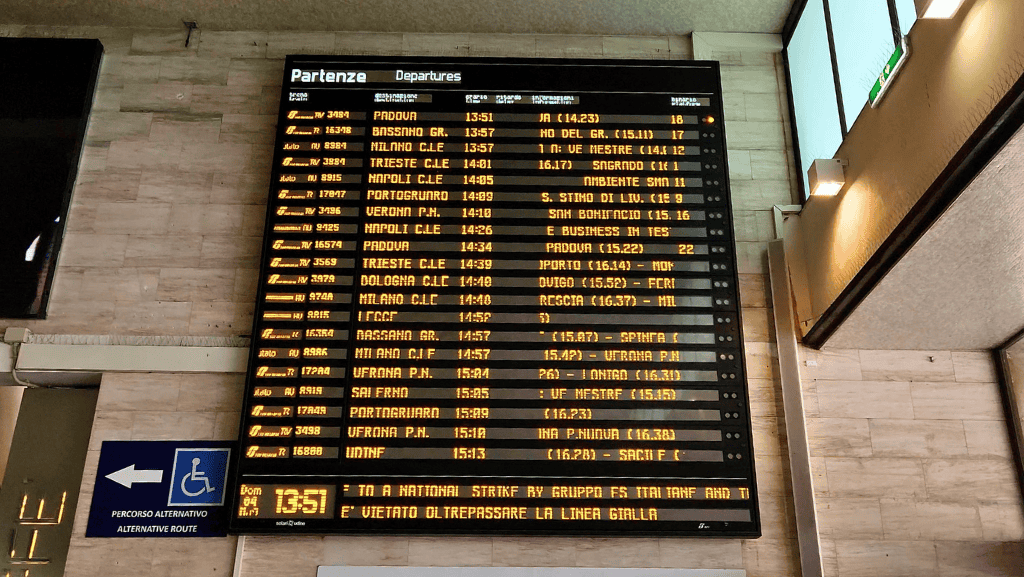
The most important thing: Don’t rely on the “Destination” column alone! That column only shows the train’s final stop, which may not be yours.
Instead, follow these steps:
- Check your ticket for the train number – It will be a series of numbers (e.g., XXXX).
- Find that number on the departure board – This will confirm your exact train.
- Look at the platform column – Your platform (binario) will be listed next to the train number.
Platforms are typically announced 10 minutes before departure, and sometimes as late as 5 minutes before, so keep an eye on the board and be ready to move!
Platform Entry & Checkpoints
Italian train stations have different entry points for high-speed (Frecciarossa, Italo) and regional trains. Look for floor signs or markings near the ticket scanners to make sure you’re entering the right area.
Sit in Your Assigned Seat!
If you’re traveling on an express or high-speed train between major cities, you have an assigned seat – and yes, people will ask you to move if you’re in theirs!
Avoid the hassle and check your seat number on your ticket before settling in.
Now that you know the system, navigating Italian train stations will be a breeze!
Final Thoughts: Which Train Should You Take?

- Traveling between major cities? Compare Trenitalia’s Frecciarossa and Italo’s high-speed trains for the best deal.
- Visiting small towns? Trenitalia is your only option.
- Booking last minute? Italo often has better last-minute prices for high-speed routes.
No matter which train you choose, book in advance for the best prices, keep an eye out for discounts, and enjoy the ride -preferably with a glass of local wine in hand.
Buon viaggio!
Ready to start exploring Italy? We’ve got a bunch of guides for you:
- Best Day Trips from Bologna, Italy
- 2 Days in Milan Itinerary
- Top Things to Do in One Day in Bologna, Italy
- Florence in 3 days
- How to Plan a Trip to Italy, A Realistic, First-Timer Friendly Guide
>> Or browse all our Italy Guides here.
Ready to visit Italy? Read hotel reviews on TripAdvisor then book your room here!
Don’t forget to pick up a travel guidebook for your other adventures.
Love this guide? Have questions? Get in touch with us on Facebook | YouTube | Instagram | Pinterest