10 Christmas Market Drinks to Look For in Europe
When you think of European Christmas markets, a mug of mulled wine probably comes to mind. It’s usually our first order, but after a few trips, we started paying more attention to what else was on the menu.
Even mulled wine changes depending on where you go. It’s called vin brulé in Italy and svařák in Czech Republic, and some stalls offer a white wine version or the option to add a shot. In Munich, we even tried a version with a flaming sugar loaf, and in Vienna, we found a punch that reminded us of warm eggnog.
We’ve put together 10 Christmas market drinks to look for in Europe, with tips on what to order, where to find them, and what we thought of the ones we tried.
Short on Time? Here Are the Key Takeaways
- Glühwein (mulled wine) is a staple at every Christmas market, but it might be under a different name
- For a dramatic drink, try Feuerzangenbowle for the flaming sugar loaf
- Fancy egg nog? Vienna’s Eierlikör punch and Italy’s Bombardino are both similar but they taste quite different
- Need a booze break? Kinderpunsch is a non-alcoholic option
Boozing Abroad contains affiliate links throughout the site. If you choose to purchase items through these links, we will earn a small commission at NO extra cost to you. Read the full disclosure policy here**
Watch Our Christmas Market Videos on YouTube
On the Boozing Abroad YouTube channel, we take you along on our trips so you can see what places actually feel like before you go. We have three dedicated Christmas market videos covering northern Italy, Munich, and Vienna. You can watch Chris try the hot beer in Bolzano, see why we went back to Munich’s medieval market, and get a look at the difference between the little markets and the big ones in Vienna.
Start with our Christmas Markets in Europe playlist, or go straight to the trip you’re planning:
- Northern Italy: Verona, Trento, and Bolzano in three days
- Germany: Three Munich Christmas markets in one night
- Austria: Our guide to Vienna’s Christmas markets
1. Glühwein, Vin Brulé, and Svařák
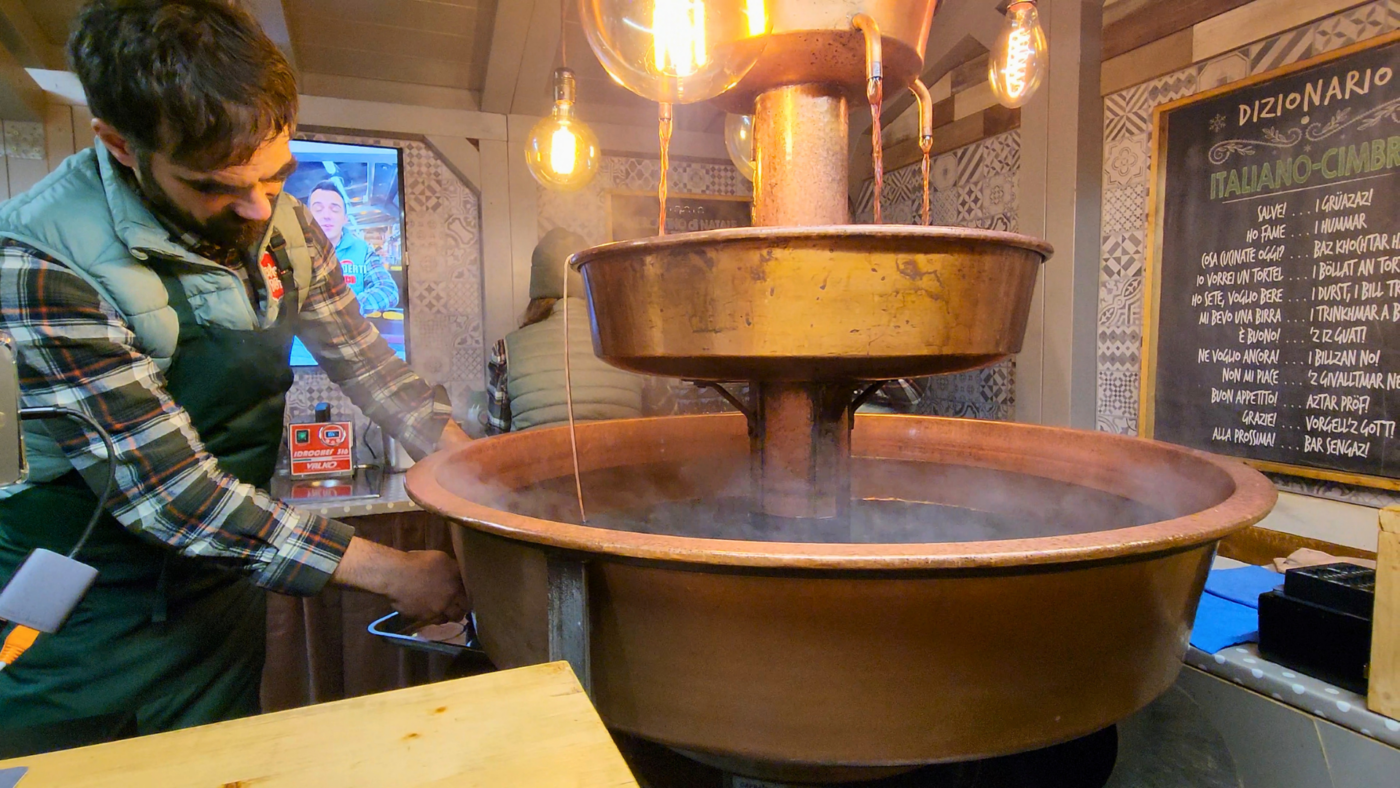
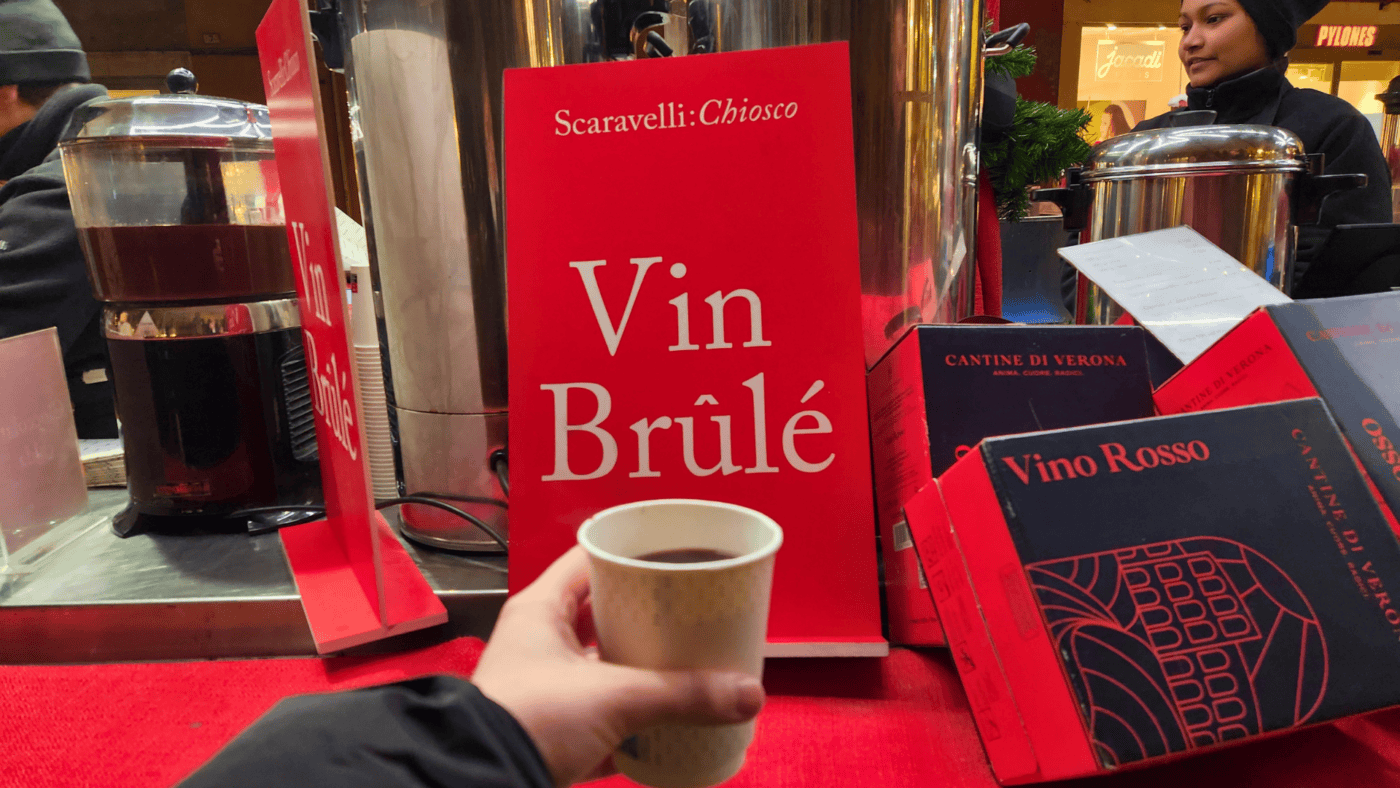
- Where we had it: Literally at every Christmas Market we visited (from Florence, Italy to Vienna, Austria).
Glühwein is hot spiced mulled wine, and goes by many names including: vin brulé, vin chaud, kuhano vino, svařák, etc. These are the local names with each country calling it something different but they’re all versions of the same broad drink
However, the recipes and types available do vary by stall, and you can find it in both white and red wine options.
Red wine is the version we usually go for, but white glühwein has a history of its own. A documented recipe from Saxony dating to 1834 used white wine and spices, including saffron and anise. The idea of seasoning wine is much older, with examples going back to ancient Rome.
2. Glühwein Mit Schuss
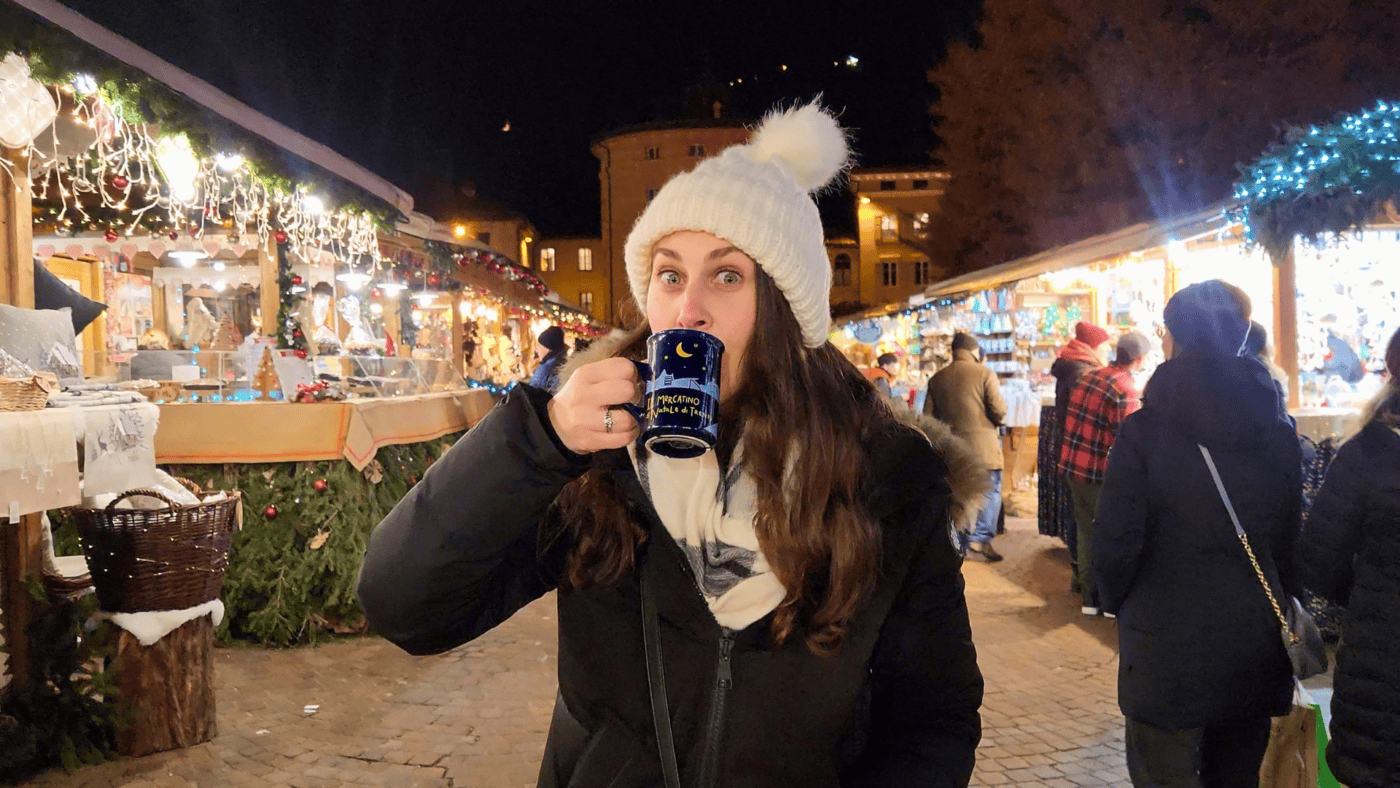
- Where we had it: Bolzano Christmas Market in Italy
Mit Schuss means “with a shot.” The vendor starts with warm spiced wine and adds a spirit or liqueur. Rum and amaretto are two options you might see, and the choices depend on the stall and the region.
We liked the extra kick, and the added shot changes the flavor of the wine, too. If the menu just says mit Schuss, ask what they’re adding. If you’re with someone else, order one regular and one with a shot so you can compare.
3. Feuerzangenbowle
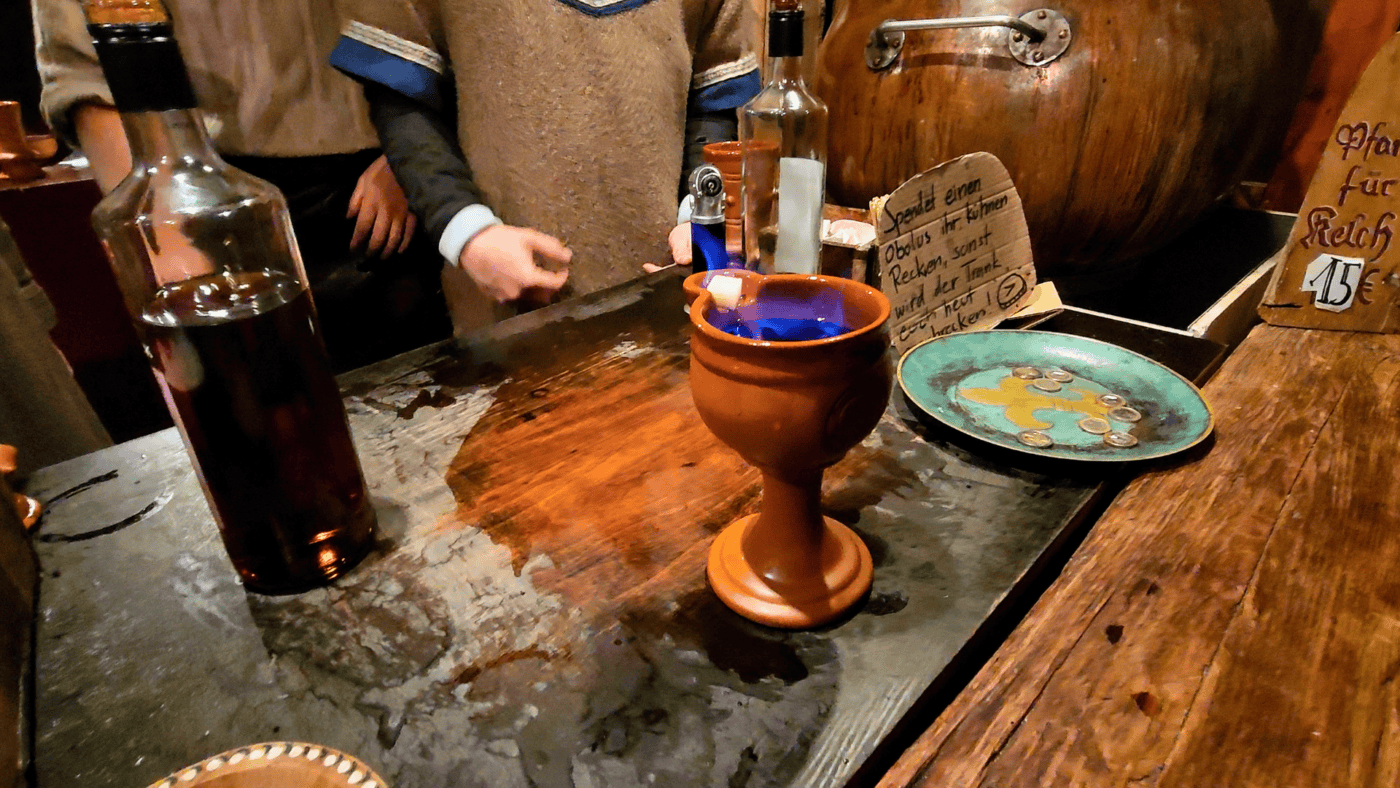
- Where we had it: Munich’s medieval Christmas market at Wittelsbacherplatz, Germany, and the Belvedere Palace Christmas Market in Vienna, Austria
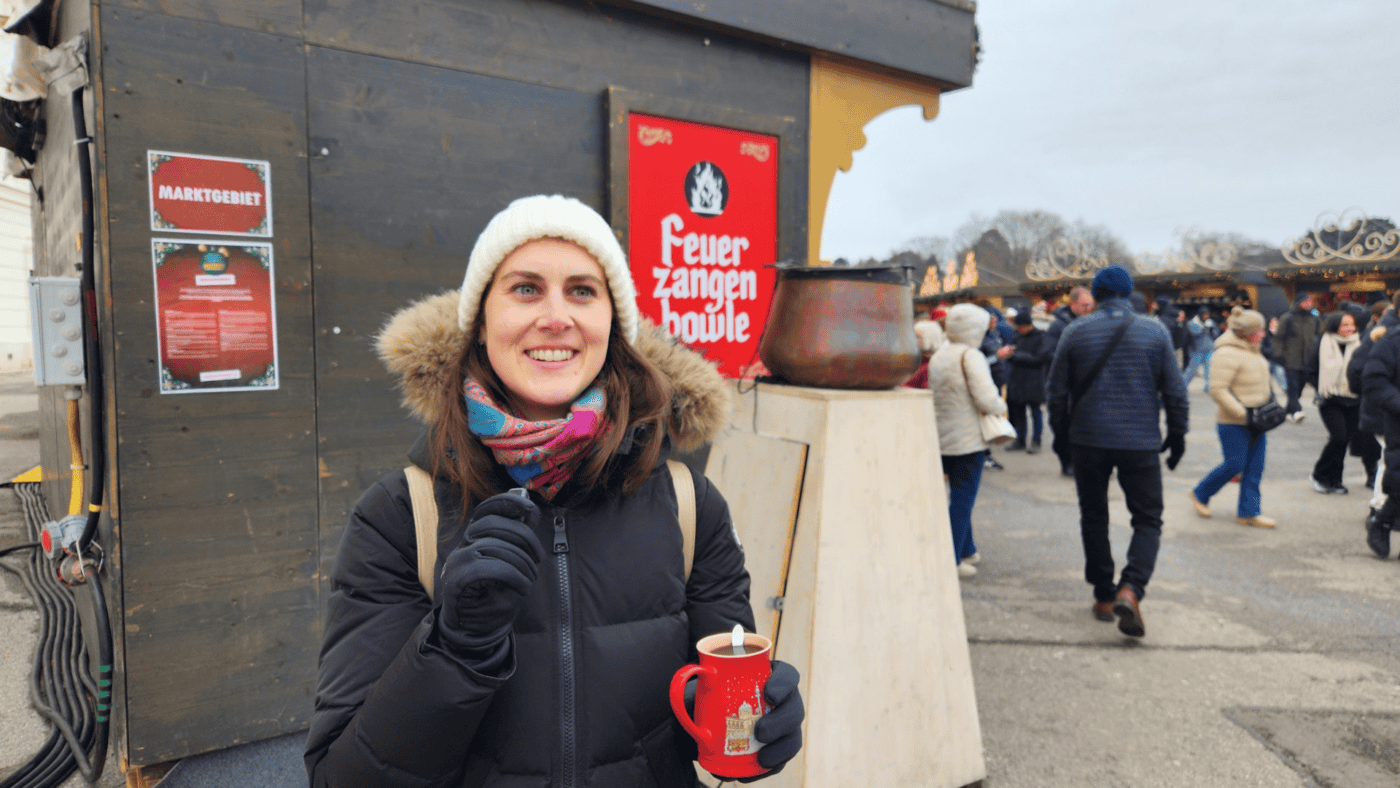
Feuerzangenbowle is a German hot wine punch made with a flaming sugar loaf. The sugar is soaked in rum and lit above the spiced wine. As it melts, the caramelized sugar drips into the drink.
The tradition dates back roughly two centuries, and a German comedy called Die Feuerzangenbowle helped bring it renewed popularity in 1944.
We spotted the rum version early in the evening and doubled back for it after checking out some other markets. Once the flame went out, we could taste the rum right away, and the caramelized sugar changed the flavor of the wine. We preferred the taste of the amaretto version, but the rum version put on the better fire show.
4. Eierlikör Punch
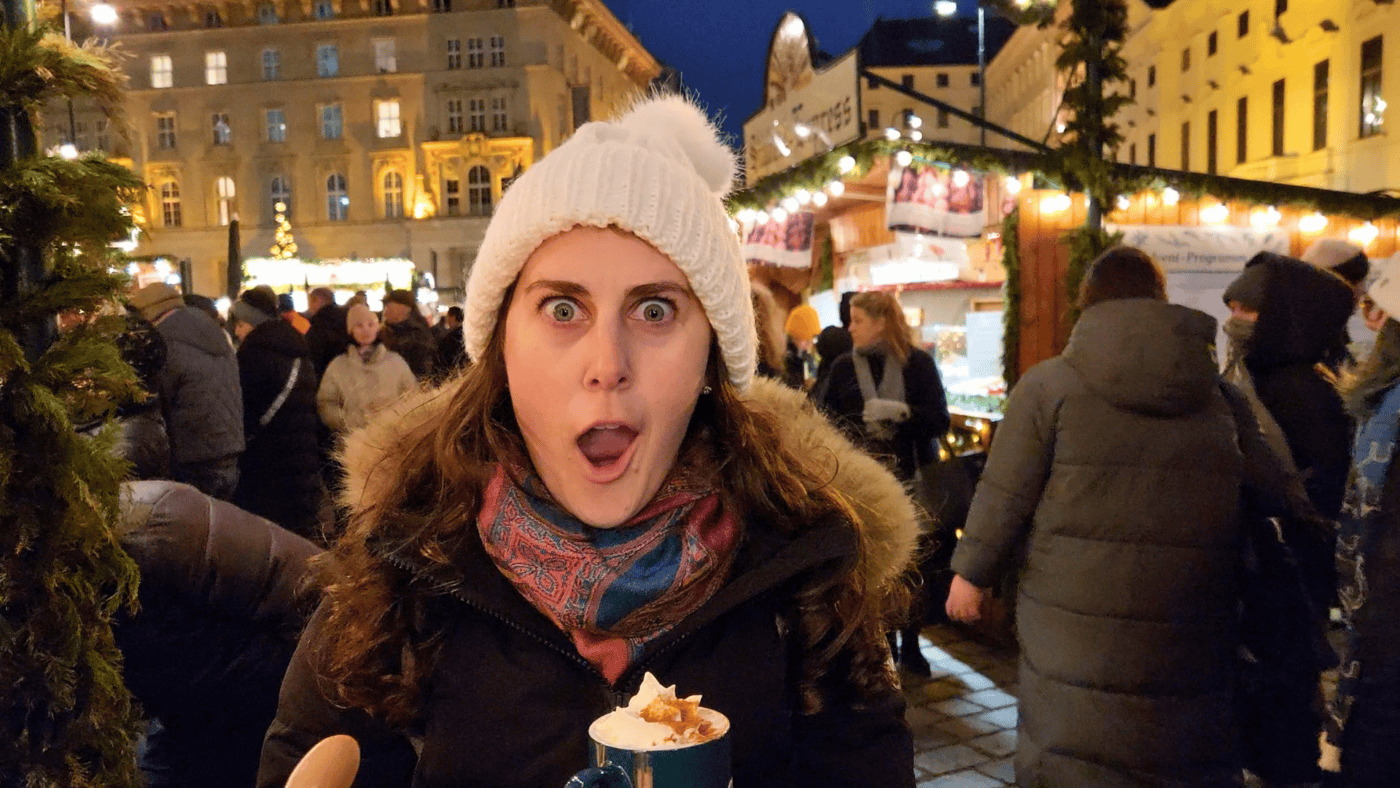
- Where we had it: Old Viennese Christmas Market on Freyung in Vienna, Austria
Eierlikör is egg liqueur. In a hot punch, it gives the drink a sweet, creamy texture that reminds me of warm eggnog. Recipes vary, so look for Eierlikörpunsch or Eierlikör-Punsch on the menu if you want the egg liqueur version.
I’d been looking for this one and was so happy when we finally found it. It was very sweet, which I normally don’t like, but I still loved this! If you usually prefer drier drinks, I’d share a mug so you can try a few sips before fully committing.
5. Bombardino
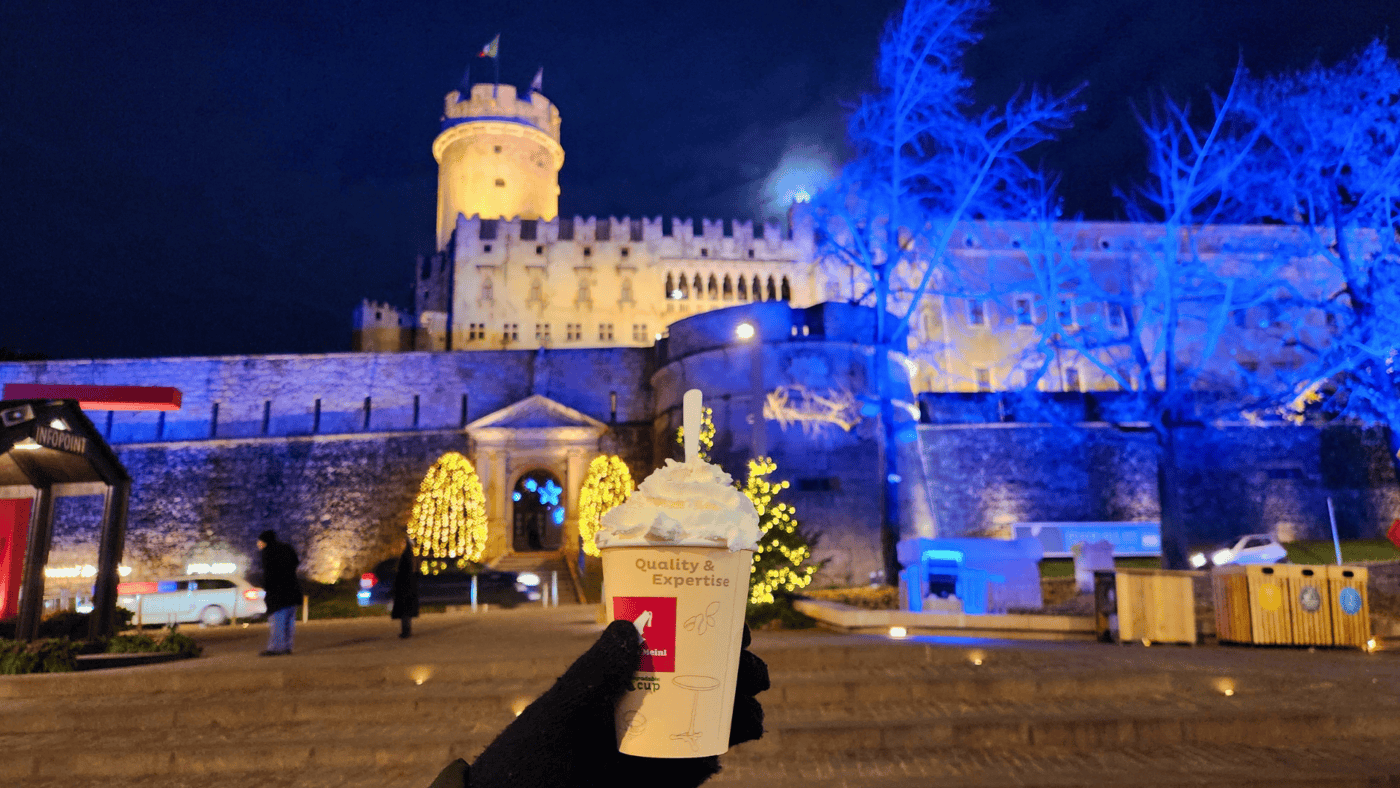
- Where we had it: Trento Christmas Market in Trento, Italy
Bombardino is a warm drink from the Italian Alps made with egg liqueur and usually topped with whipped cream. The former manager of the Mottolino ski hut in Livigno, Lombardy, traces it back to 1972, when they served warm Vov egg liqueur with whisky and cream. The version we had used brandy.
It took us a few tries to get past the mountain of whipped cream, but once we did, the brandy came through right away, then the rest of the drink mellowed it out. It shares that creamy egg liqueur base with Eierlikör punch, but the spirits came through more in our Bombardino.
6. Hot Mead
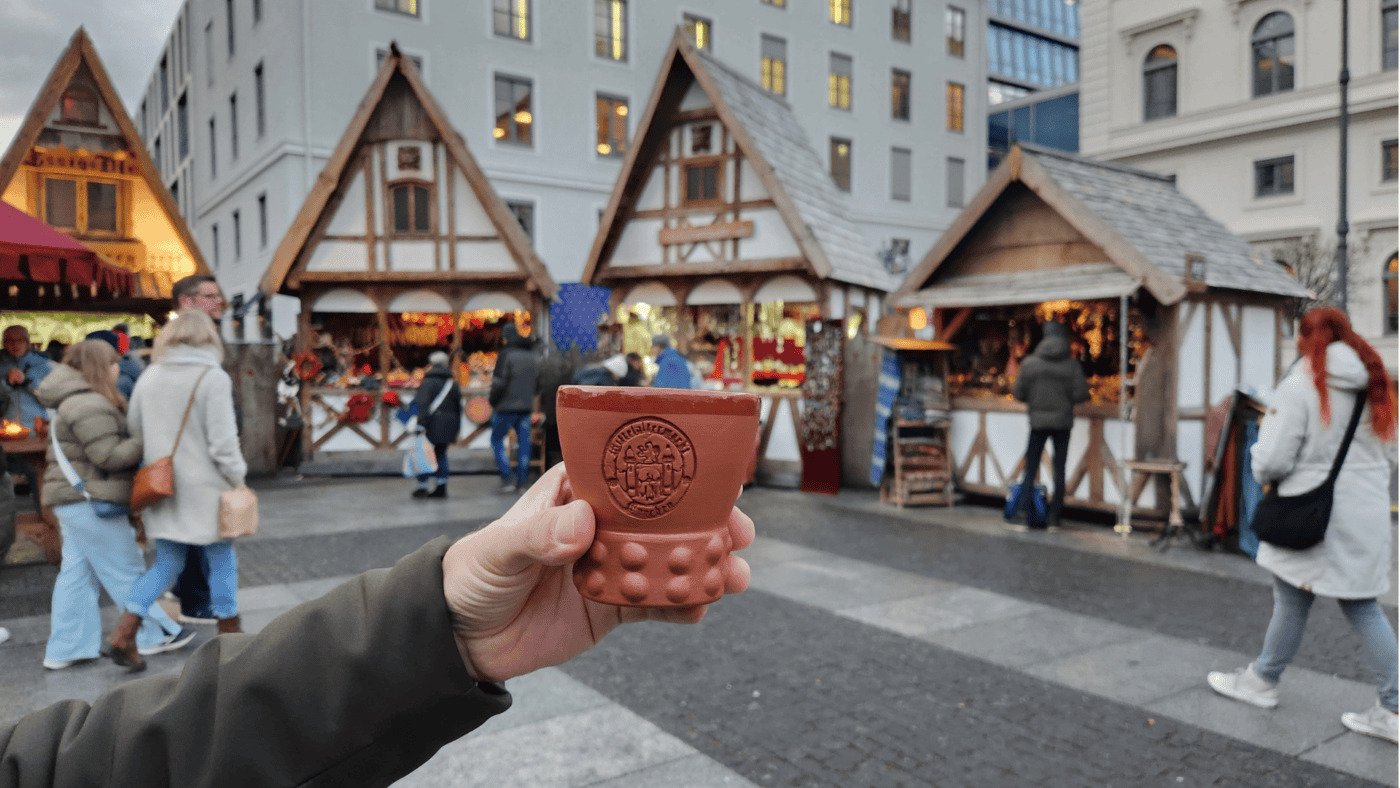
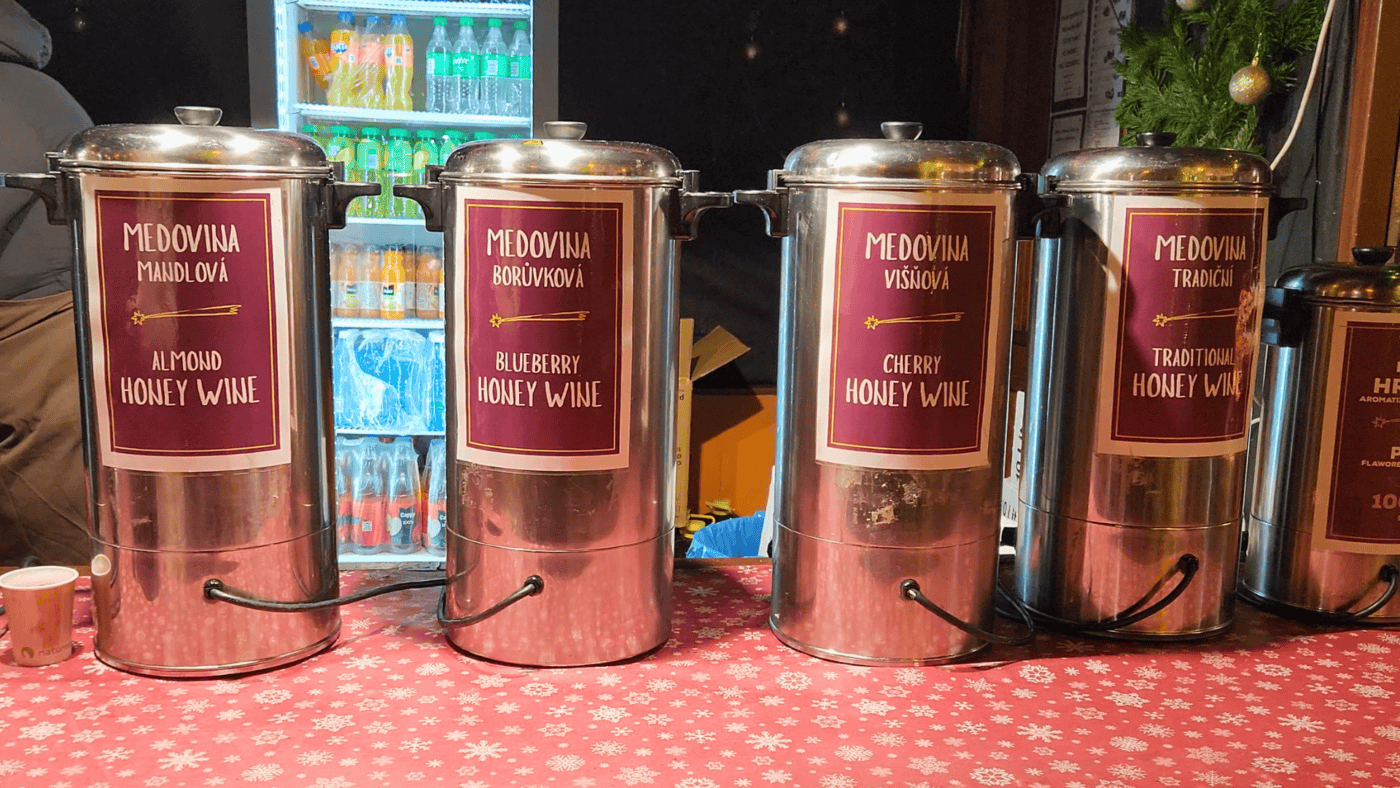
- Where we had it: Munich’s medieval Christmas market at Wittelsbacherplatz, Germany
Mead is made by fermenting honey with water. In German, it’s called Met, and in Czech, it’s called medovina. Some Czech market versions are flavored with spices, vanilla, or fruit juice.
Our hot mead tasted more like warm apple juice than we expected. We were glad we tried it, although the honey flavor didn’t come through as much as we’d hoped. The vendor offered to add a shot of Irish whiskey, but we went with the plain version since we still had two more markets to visit.
7. Hot Beer Punch
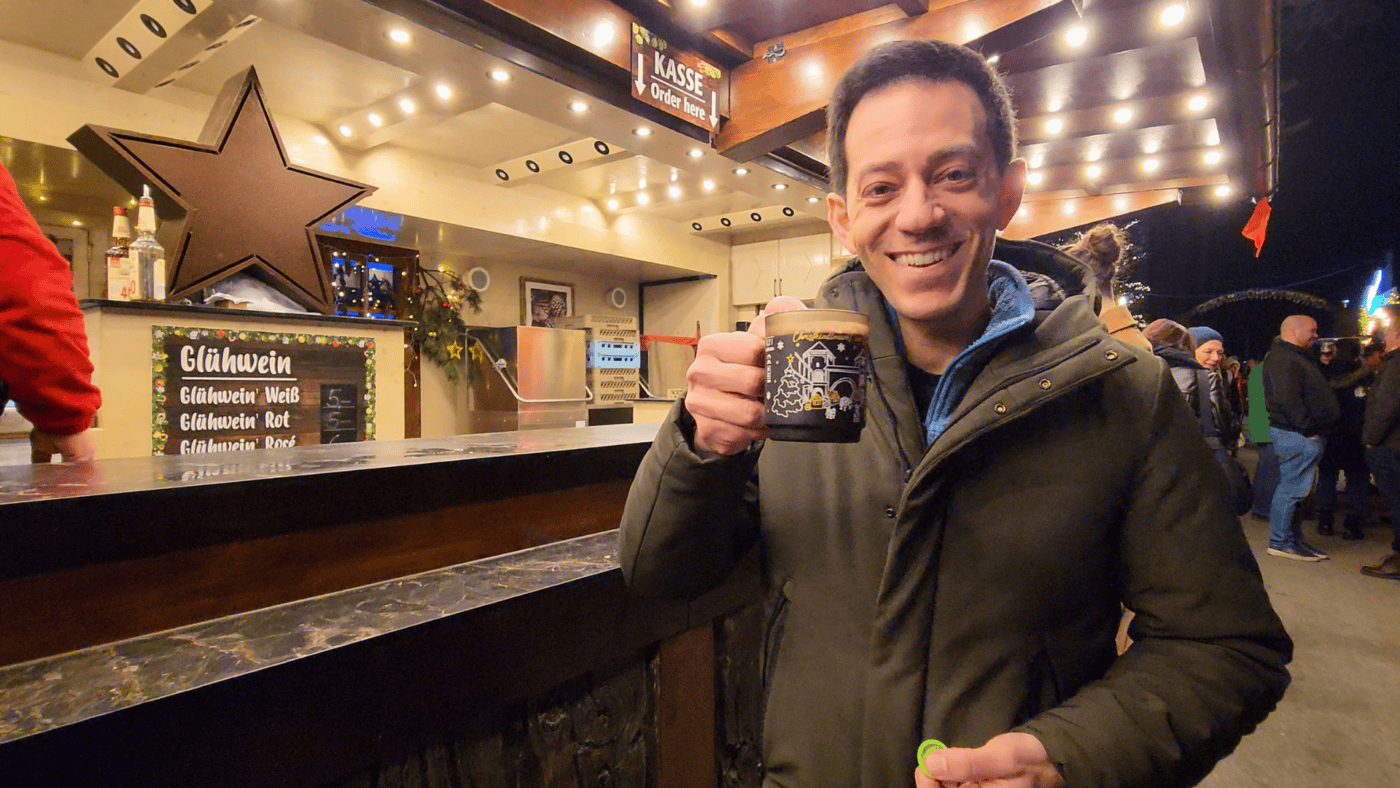
- Where we had it: Bolzano Christmas Market in Bolzano, Italy
Hot Beer Punch was the drink I was least sure about. I pictured an ordinary pint that had been sitting out too long when Chris said he was going to order one. What he got tasted like fruit punch, and he said it reminded him of tea.
We saw plenty of mulled wine on this trip, but this was a less familiar option. If you see hot beer or beer punch on a menu and aren’t sure you want a whole mug, it’s a good one to split out of curiosity.
8. Hot Grog
- Where to look for it: Christmas markets in Prague, Czech Republic
The Czech winter version of grog is usually made with rum, hot water, sugar, and lemon. It’s a simpler drink than mulled wine or fruit punch, with the rum and lemon doing most of the work.
The name has British naval roots. In 1740, Admiral Edward Vernon ordered his sailors’ rum ration diluted, and grog became the name associated with the drink. The hot version became a Czech winter staple. If you’ve already had your fill of mulled wine, this is another warm option to look for.
9. Hot Punch
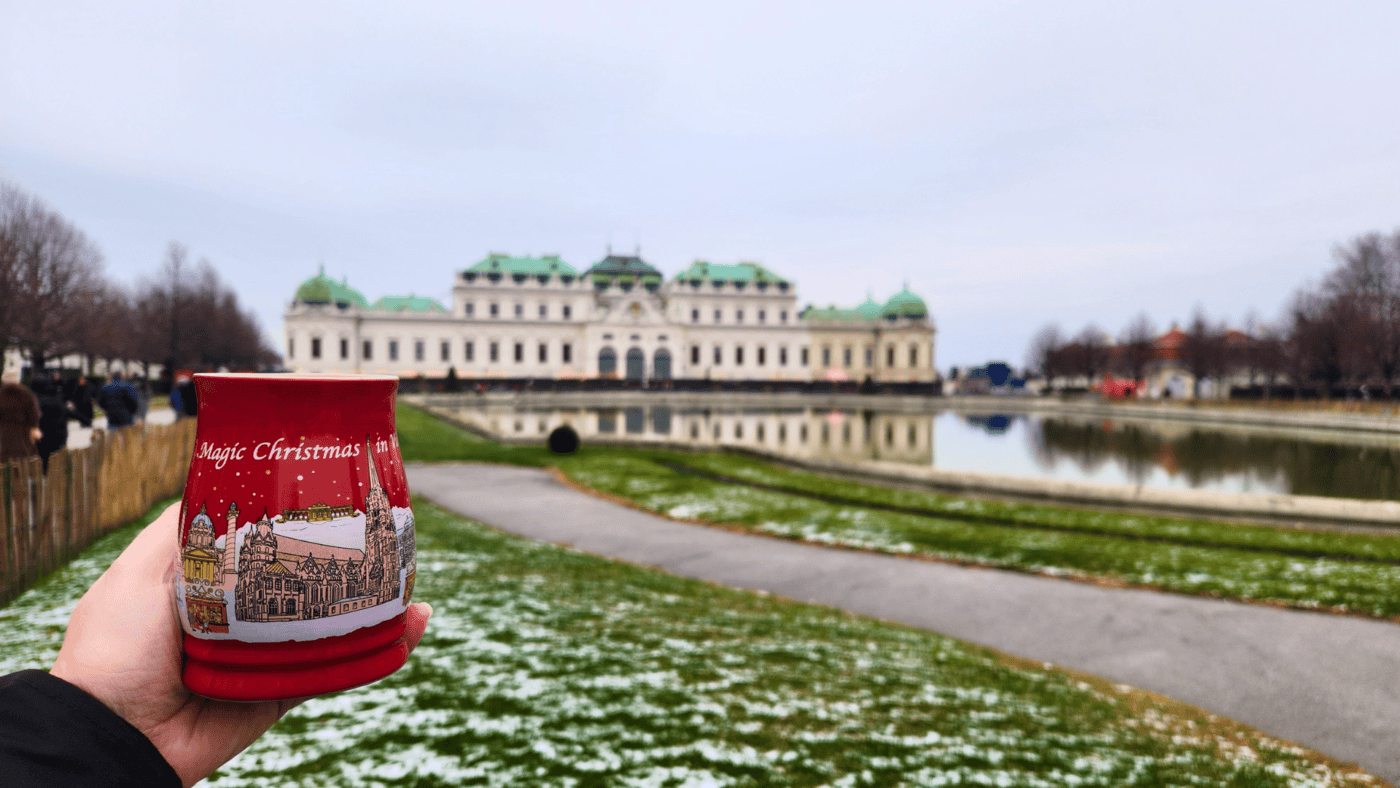
- Where we had it: Rathausplatz Christmas Market in Vienna, Austria
Hot punch, or Punsch, is a broader category than Glühwein. Glühwein starts with wine and spices. Punch can use fruit juice, tea, wine, or a mix, and some versions add a spirit such as rum. If you’re curious about what’s in a particular punch, ask the vendor. The fruit on the sign only tells you part of the recipe.
We tried apricot and berry punch. I loved the apricot, and the berry was sweeter and had rum in it. It was so windy and cold out that both mugs seemed to reach room temperature within minutes – just kind of a general thing to know as you travel through these colder regions during this time.
10. Kinderpunsch
- Where to look for it: Christmas markets in Germany and Austria
Kinderpunsch is a non-alcoholic hot fruit punch, usually made with fruit juice and winter spices. The name means “children’s punch,” and adults can order it too.
Look for it at stalls that sell Glühwein or other kinds of punch. If you’re checking the menu for more alcohol-free options, look for the word alkoholfrei in German or analcolica/analcolico in Italian)
Christmas Market Drink FAQ
How do Christmas market mug deposits work?
At many stalls, you pay for the drink plus a deposit for the mug. In German-speaking markets, look for Pfand on the sign. Return the mug to the place the vendor specifies to get the deposit back. If you want to take the mug home, ask whether you can keep it for the deposit or buy it separately. In Munich, we paid different deposits at different markets, so check before you order a round.
Do I need cash at European Christmas markets?
Bring some cash in the local currency, especially for small stalls. The vendors we visited at Munich’s medieval market were taking cash only on our trip. Card acceptance varies by vendor, so ask before ordering if you’re relying on a card.
What’s the difference between Glühwein and hot punch?
Glühwein is hot spiced wine, made with red or white wine. Hot punch can have a fruit, tea, or wine base and may include spirits. If you’re looking for a version without alcohol, order Kinderpunsch or just ask.
Can adults order Kinderpunsch?
Yes. It’s a non-alcoholic option for anyone who wants a hot drink. You can also ask whether the stall has alcohol-free Glühwein if you want something closer to the spiced wine flavor.
Planning a Christmas Market Trip?
Start with our Christmas markets in Italy guide for what we ate, drank, and liked in Verona, Trento, and Bolzano.
If Italy is one stop on a bigger trip, our Italy travel guide has more ideas for where to go next or browse some popular guides below:
- Is Trenitalia Executive Class Worth It? Full Frecciarossa Train Review
- A Weekend In Venice, Italy
- Ultimate Road Trip to Tuscany: A Wine Lover’s Paradise
- The Best Florence Italy 3 Day Itinerary
Ready to visit Christmas Markets in Europe? Read hotel reviews on TripAdvisor then book your room here!
Don’t forget to pick up a travel guidebook for your other adventures.
Love this guide? Have questions? Get in touch with us on Facebook | YouTube | Instagram | Pinterest