Franciacorta, Italy: 4 Days, 6 Wineries, and the Sparkling Wine Nobody Talks About
Most people know Prosecco. And everyone knows Champagne. But Franciacorta sits somewhere off to the side of both, quietly making some of the best sparkling wine in Italy while the rest of the world looks elsewhere.
We live in Italy and we had barely heard of it before we moved here. Then we kept catching whispers about it from people who know Italian wine, and it went on our list. This post covers our full 4-day trip through the region, all 6 wineries we visited, the scenic drive we’d tell you to take even if you skip the wine, and the handful of things we wish we’d understood before we arrived.
We know enough about Italian wine to know how much we still do not know. Franciacorta fell squarely into that category, so we drove up to find out why everyone who knows this stuff seems to love it.
Short on Time? Here are the key takeaways:
- Know before you go: brut means dry, dry means sweet, and pours here are close to full glasses.
- Il Mosnel has a Taste and Go option, where you pick 3 pours and skip the tour if you want to try wine but lack a lot of time
- Don’t miss Berlucchi, the estate where modern Franciacorta began in 1958 and the most detailed tour of the trip
- Boccadoro has an epic view
- Il Dosso is a family operation with a rare focus on reds in addition to bubbles
- Le Marchesine is a medium size producer who has great options to try including some older vintages
Watch the Franciacorta Trip
We filmed all 4 days of this trip, all 6 wineries, the tastings, the cellars, and the drive between them.
If you want to see the region before you book it, the full video is below.
Prefer to read? Keep scrolling.
Everything we cover in the video is broken down below.
What is Franciacorta?
The short version: Franciacorta is Italy’s premier traditional method sparkling wine.
If you heard that and thought, “oh, so it’s Italian Champagne,” not exactly. Yes, it shares the production method. The bubbles come from a second fermentation inside the bottle, and the wine spends time aging on the lees, which are the dead yeast cells that build texture and complexity.
You’ll hear Champagne mentioned any time people bring up Franciacorta, and the comparison makes sense on that one production method point. But once you get past the method, the two go in completely different directions. Different grapes, different climate, different soils, and a different personality entirely.
The 3 Styles You’ll See on Every Bottle
There are 3 main styles of this bubbly goodness. Franciacorta on its own is the classic everyday wine of the region and the one you’ll see most. Satèn is unique to this area, made only with white grapes and bottled at lower pressure for a softer, creamier texture. And Rosé brings in Pinot Nero, a red grape, for more structure.
You’ll also see terms like Brut and Pas Dosé. Those are not styles. They tell you how much residual sugar is left in the wine. Brut is the most common and sits roughly mid-sugar scale while Pas Dosé has zero added sugar.
The Sugar Thing Nobody Warns You About
Quick refresher on some of the terms on the labels, because they are confusing.
Remember, when it comes to sparkling wine, things are a bit backwards because “dry” doesn’t mean what you think. “Brut” means dry and “Dry” means sweet.
Big picture, these terms just refer to how sweet the wine is, based on the amount of residual sugar left after fermentation. The higher the residual sugar, the sweeter the wine (and in our opinion, the worse the hangover is!).
- Extra Brut = super dry (0-6 grams of sugar/liter)
- Brut = classic dry (less than 12 grams)
- Extra Dry = lightly sweet (12-17 grams)
- Dry = actually sweet (17-32 grams)
Sugar can sometimes mask the imperfections in a wine too. Strip it out and there’s nowhere for flaws to hide, so you end up tasting more of what’s in the glass. That’s why we keep drifting toward the low and zero sugar bottles. You get more wine feel, for lack of a better phrase.
The Aging Rules
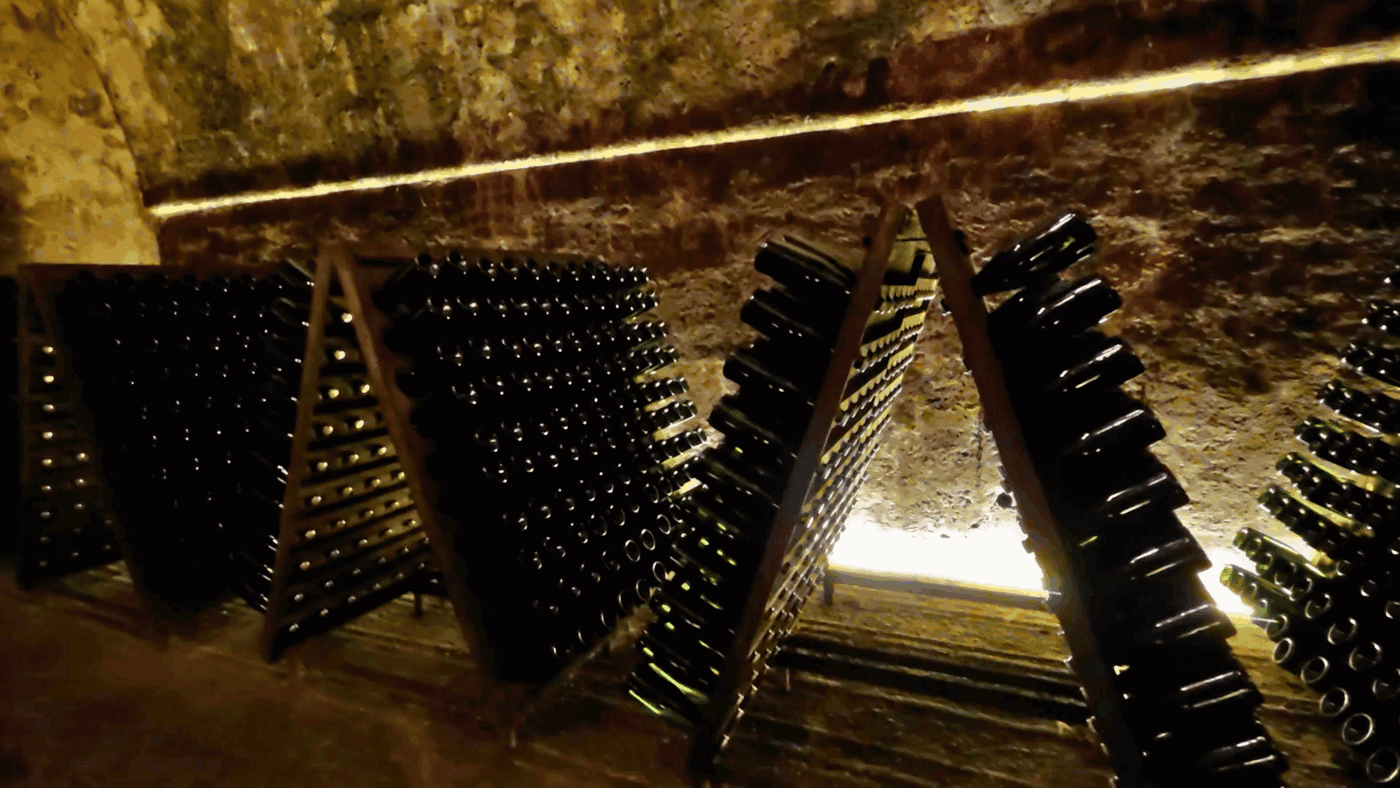
Standard non-vintage Franciacorta has to age at least 18 months. The minimum for non-vintage Champagne is 15 months. We’re certainly not claiming one is better than the other just because of this aging requirement…plenty of Champagne producers age theirs far longer. But it gives you a sense of the baseline expectation here.
One more thing worth knowing. Having done Napa and other wine regions in the past, the pours in many of those regions were tiny. Here, they seemed like they were close to full glasses. These are not tastings. They’re servings of Franciacorta, and they want you to be certain about how much you love the wine.
Franciacorta Wineries to Visit
Il Mosnel
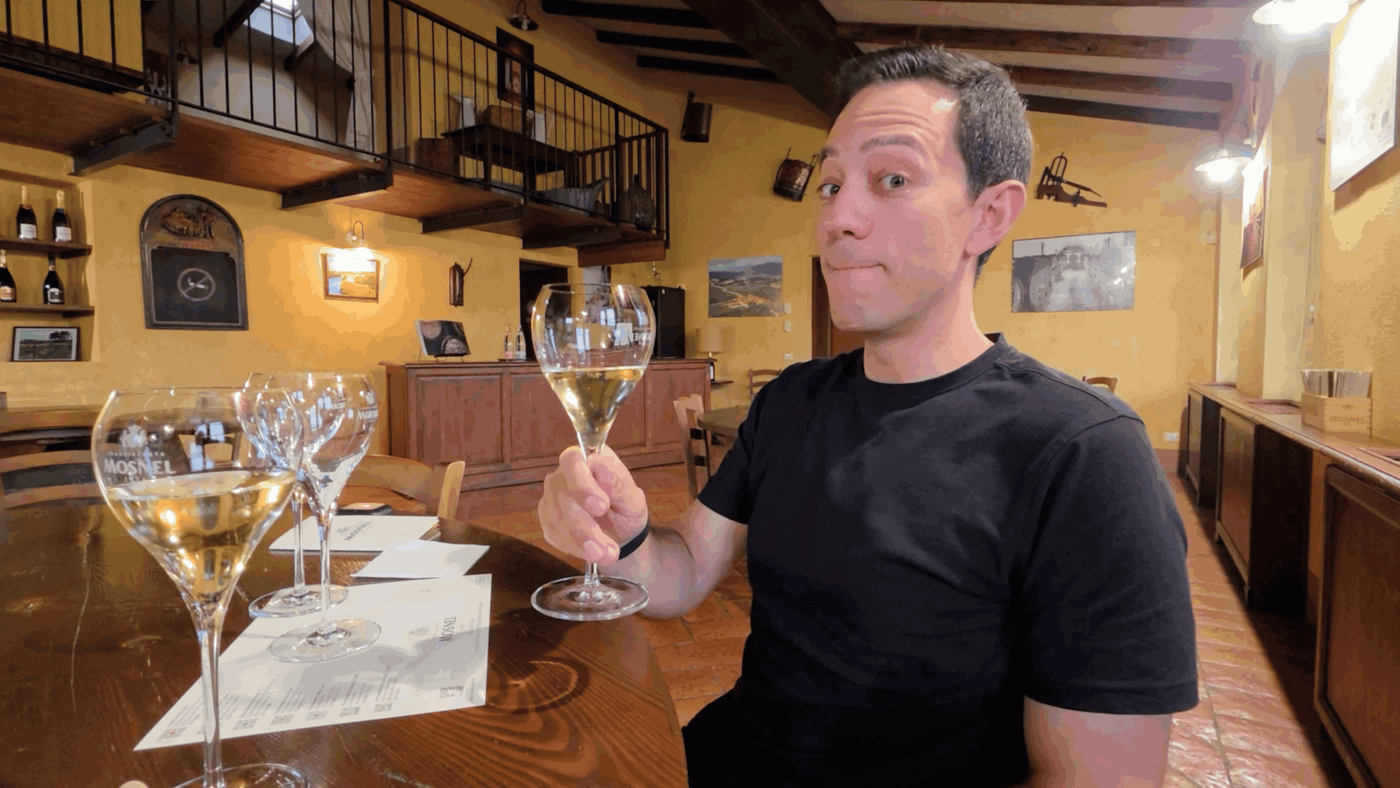
We opened at Il Mosnel, and it felt like the right place to begin. The cellars here date back to the 1500s, but the modern identity of this estate, and a big chunk of the region’s identity, traces to Emanuela Barboglio.
She took over in the mid 1900s, was one of the early people involved in shaping the Franciacorta DOC in the late 1960s, and later became a founding member of the Franciacorta Consortium in 1990.
Her fingerprints are on every bottle of Franciacorta anyone drinks today, not just the ones with her label on them.
We booked the Taste and Go option, which gets you 3 glasses chosen from their current list of 7 bottles. We picked a brut and a natural (organic) brut to start, and ran them side by side to see if we could spot the differences. We could, sort of.
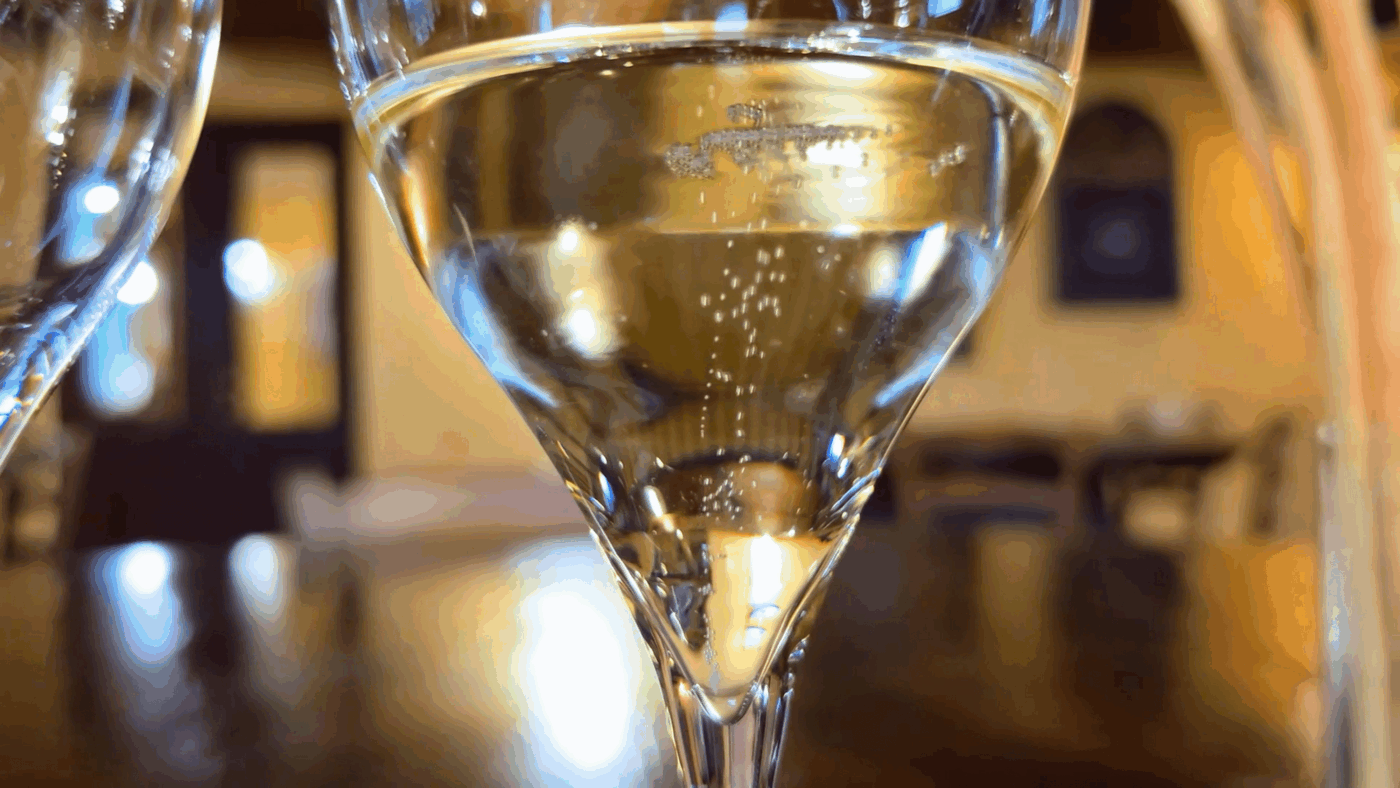
One thing that did catch our attention right away was the perlage, which are those little bubbles rising from the bottom, and Franciacorta’s are noticeably tighter than what you get in Prosecco.
The estate farms 41 hectares, all of it sustainably, which turns out to be normal here rather than exceptional. More than 60% of Franciacorta vineyards are organically farmed, one of the highest percentages of any wine region in the world.
Il Dosso
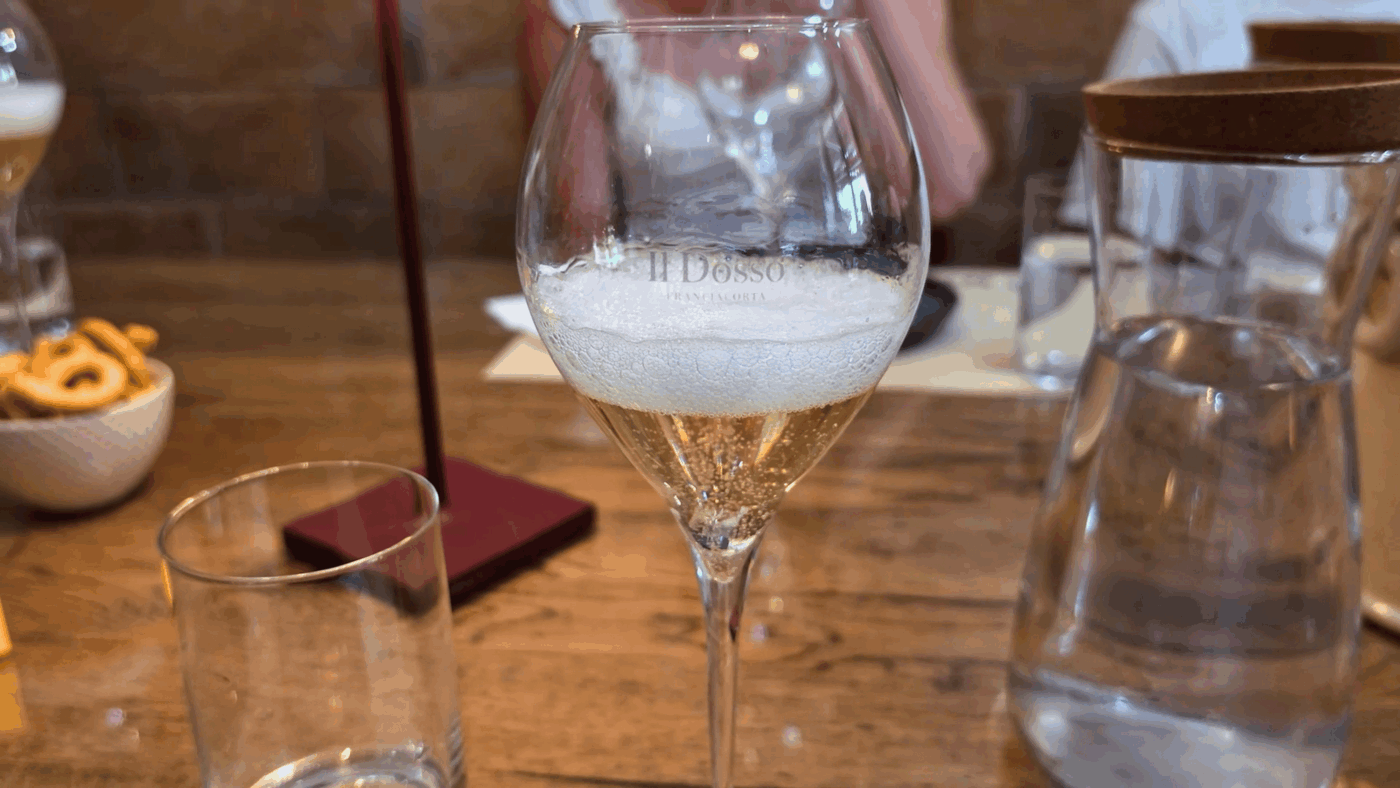
Il Dosso is young compared to Il Mosnel. Luca Archetti founded it in 1997 to fulfill his father’s dream while continuing a family tradition that stretches back 5 generations.
What stands out is that Luca does things differently. He sits in one of the most famous sparkling wine regions in the country and still pours serious attention into red wines and older grape varieties that most producers around him walked away from. He does the classic Franciacorta too, obviously, but Pas Dosé is his specialty.
It’s a small production here too. Just the father and his 2 children run it, and they are producing around 50,000 bottles a year. And honestly, we tend to connect more with places like this as you feel like you’re meeting people rather than a brand, and the wine backed it up.
Boccadoro
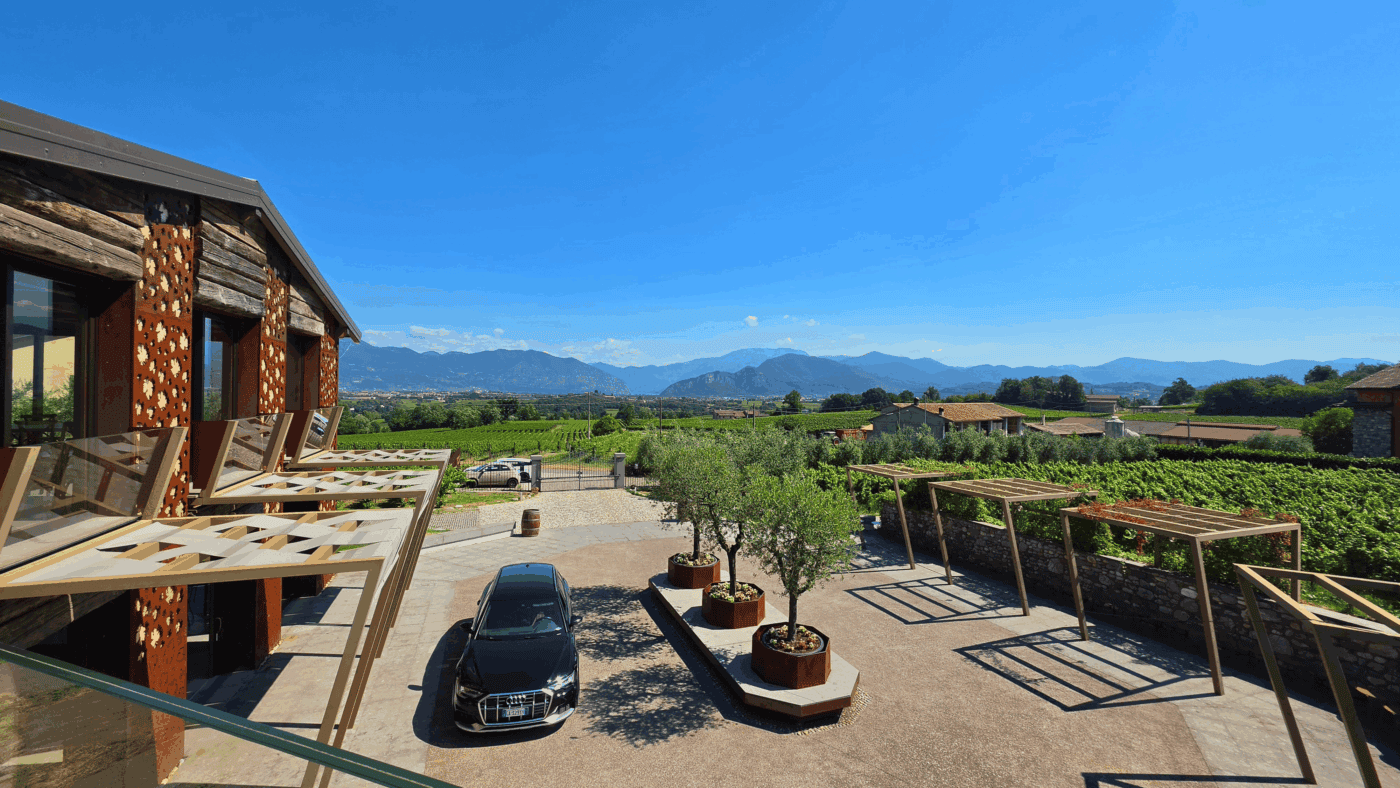
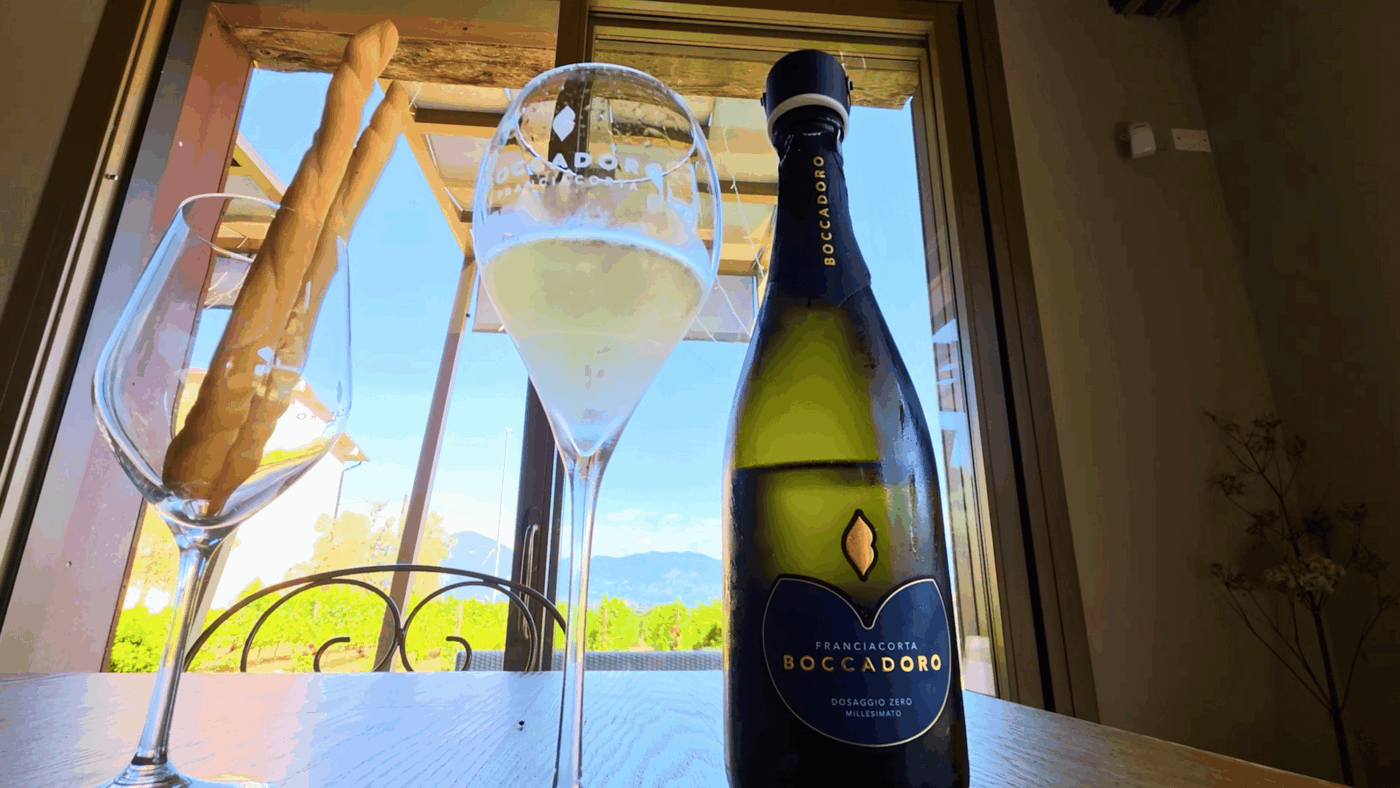
Boccadoro is the youngest winery on our itinerary by a wide margin, founded in 2014 by Giovanni Lussignoli. The family connection to these vineyards goes back to the 1970s, when a young Giovanni and his father Luigi started working the vines in these hills.
This stop felt like a look at where the region goes next. Smaller and more boutique than most of the others, run by the generation that grew up watching Franciacorta become what it is and is now building on top of it.
And the panoramic views out here, both on the property and from the tasting room, are ridiculous. We had a tasting of 3 Franciacortas to ourselves with the head winemaker, which we did not expect and will not forget.
Ricci Curbastro
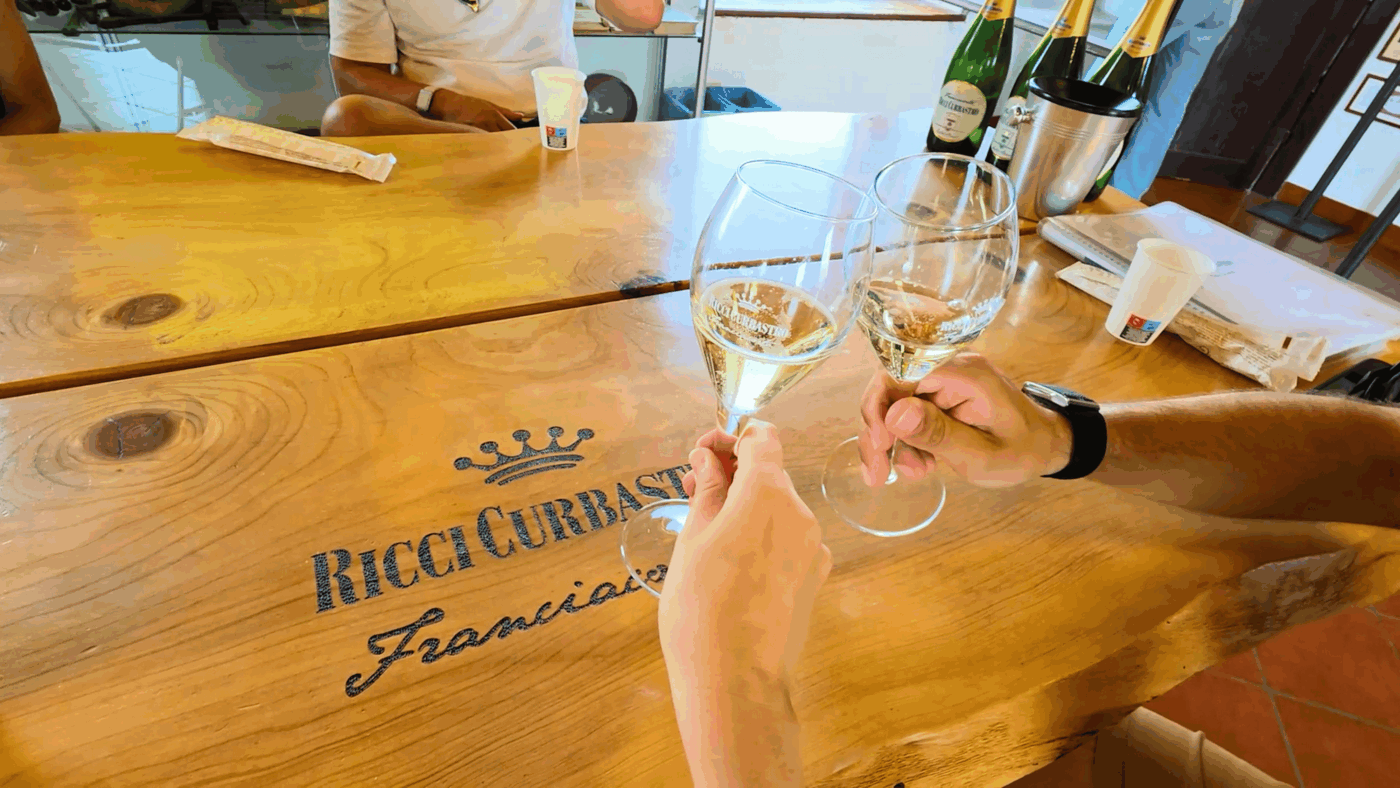
We accidentally did a decent job planning this trip, because the same names and themes kept resurfacing as we went. Ricci Curbastro is a perfect example.
The family’s documented history here goes back to 1380, when they relocated after being driven out of Florence. More recently, Gualberto Ricci Curbastro helped establish the Franciacorta DOC in the 60s, and his son Riccardo later served as president of the Consortium. Just like at Il Mosnel, we were standing in another estate that helped build the region itself.
The property also houses an agricultural and wine museum preserving centuries of local history. We’ve always appreciated that winemaking is a labor of love, but walking through those rooms reframed it. The tools these people used, the backpacks they hauled grapes in, the hand crank equipment. Fascinating in a way a tasting room cannot replicate.
We booked the Triple Tour, which covers a guided cellar tour plus 3 of their Franciacortas: brut, Satèn, and rosé.
Berlucchi
The next stop took us to arguably the most important winery in the region, because this is where modern Franciacorta started.
In 1958, a young winemaker named Franco Ziliani walked into Guido Berlucchi’s estate with a question: what if we made sparkling wine the way the French do, using the traditional method? Berlucchi was intrigued. Three years of experimentation later they produced 3,000 bottles of the first Franciacorta, called Pinot di Franciacorta.
It became an immediate hit in Milan, tied to Italian glamour, and from there the whole thing took off. Franciacorta became a recognized DOC region in 1967. In the 1990s, 29 producers formed a consortium to push standards higher, eventually making Franciacorta the first Italian sparkling wine region to earn DOCG status.
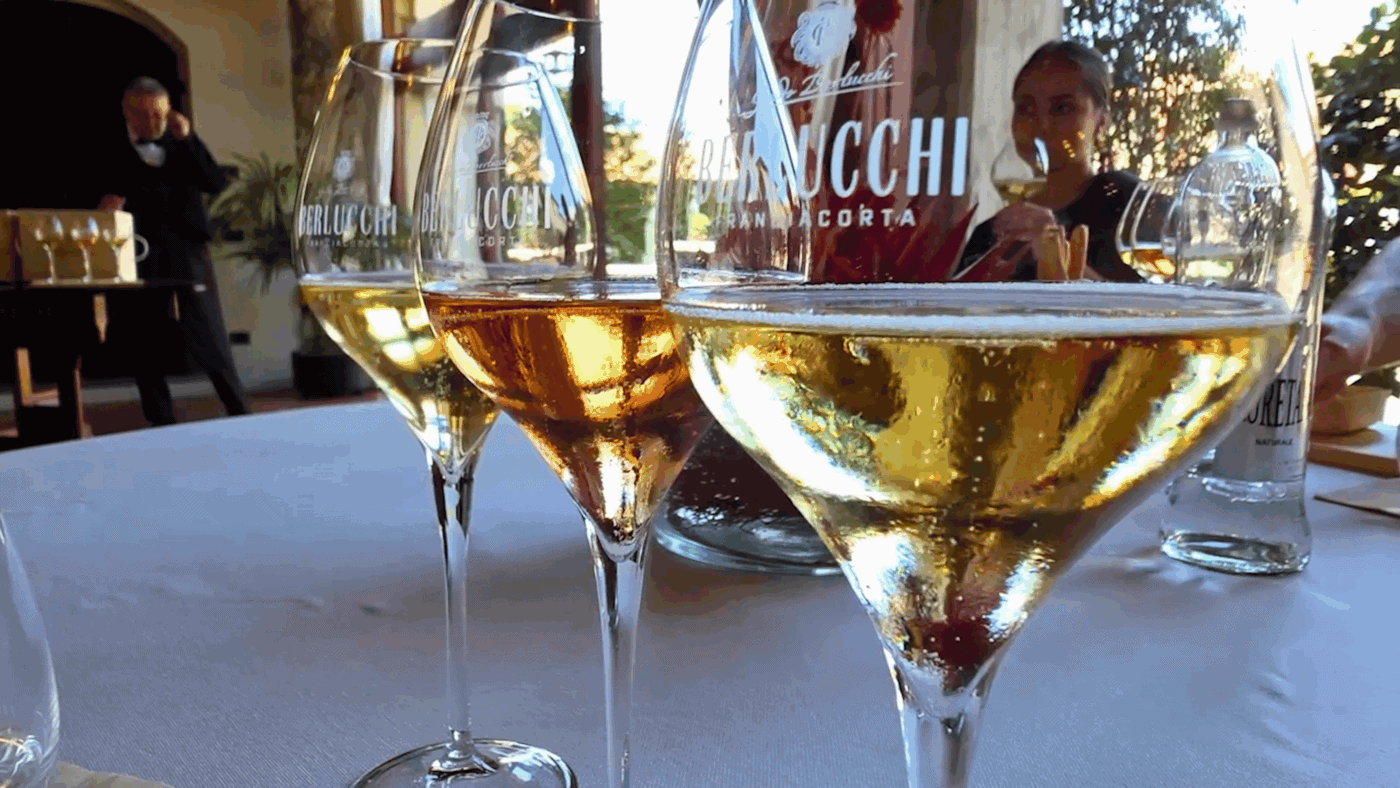
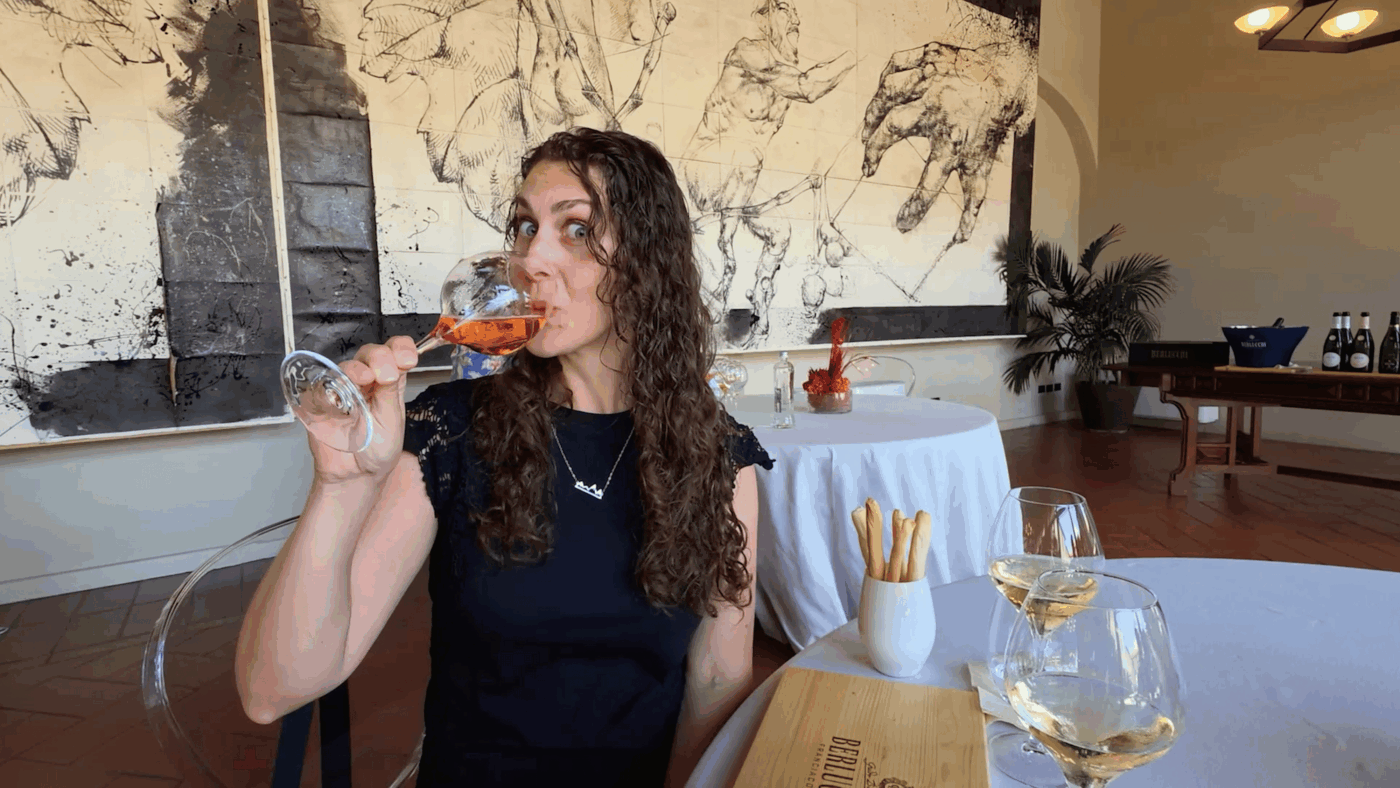
And to show just how closely this place is tied to the identity of the region and the wine, Gambero Rosso named Berlucchi Winery of the Year in 2022 for “per aver fatto la storia dello spumante metodo classico italiano,” or for having written the history of the classic method in Italy…which is not modest praise.
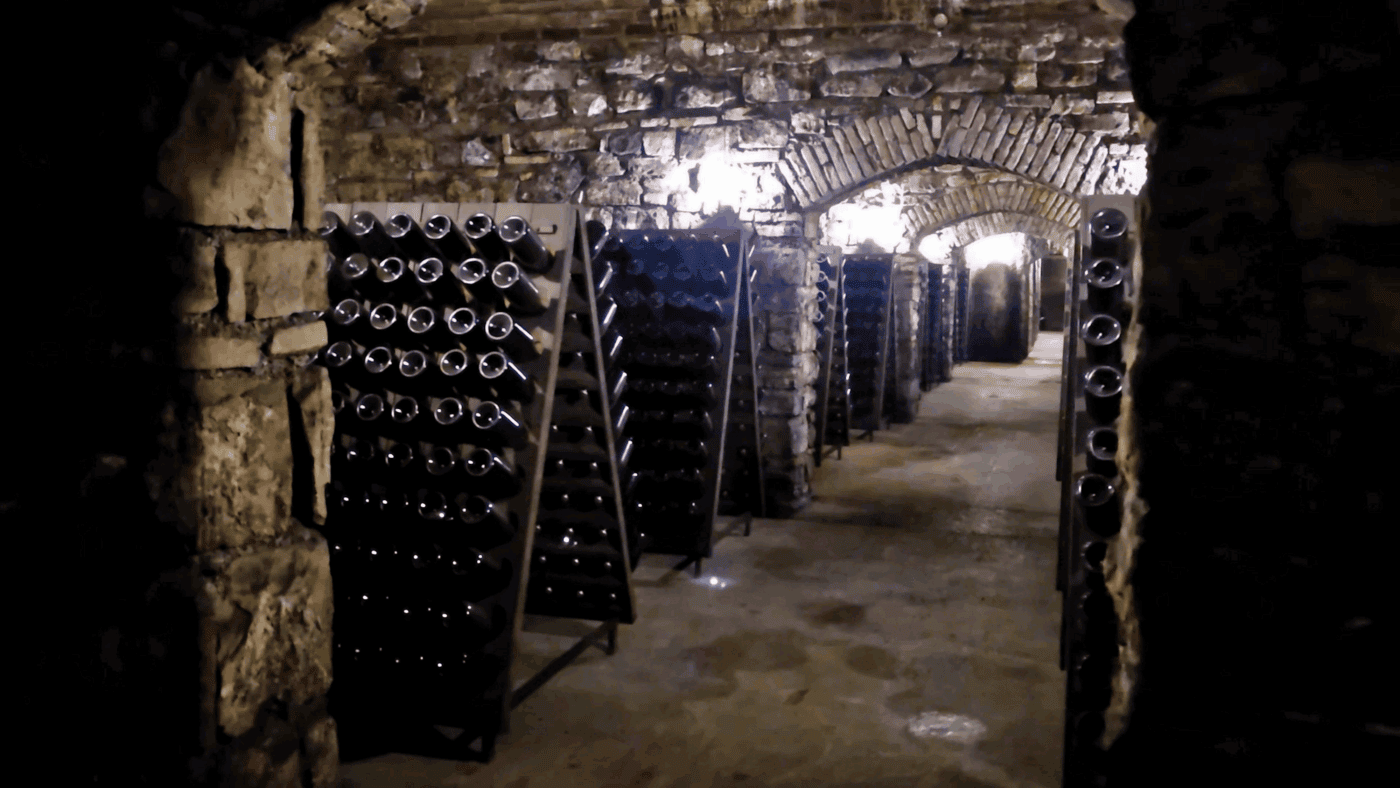
It’s still family run, now by Franco Ziliani’s 3 children. Tour the winery and you walk through the underground cellars where those first bottles were made. The last remaining bottle from the original 1961 run is still down there.
This was hands down the most informative, most detailed tour of the trip. If you only do one, do this one.
Le Marchesine
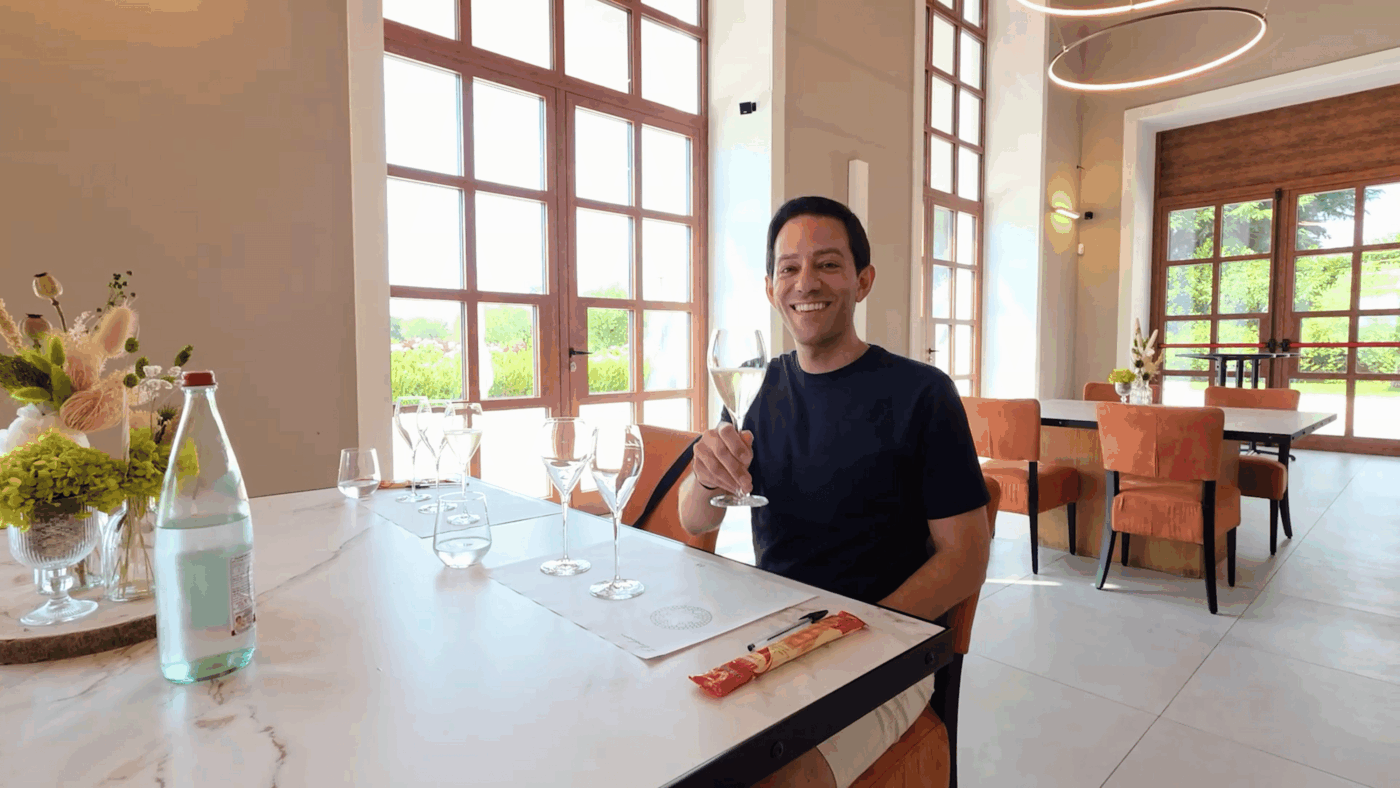
Le Marchesine was founded in 1985 by Giovanni Biatta, though like most estates in this region the family connection to wine runs back many generations. They were early adopters of modern vineyard techniques, early to experiment with grape clones, and they’ve put serious money into equipment so every bottle comes out consistent with the last.
Our guide here actually used to work for the Franciacorta Consortium, so we got a level of insider detail we had not gotten anywhere else. And on this tour, we even got to go into the bottling area itself, where the guide opened up the machines and walked us through what each one does.
This is a medium sized producer, cranking out around 750,000 bottles a year. Compared to Berlucchi, which is producing in the millions, this felt like the right middle ground. If you’re building an itinerary, Le Marchesine bridges the gap between the tiny family operations and the giants.
Franciacorta FAQs
What is the difference between Franciacorta and Prosecco?
Franciacorta is made with a second fermentation in the bottle, the same method as Champagne. Prosecco is made in a tank. You’ll notice it in the glass, since Franciacorta’s perlage runs much tighter, and in the sugar, where Prosecco can hit 12 to 16 grams against Franciacorta’s under 3.
How do you pronounce Franciacorta?
Fran-cha-COR-ta. The “cia” is a soft “cha,” not “see-ah.”
Where is Franciacorta?
Franciacorta sits in Lombardy in northern Italy, in the province of Brescia, tucked between the southern shore of Lake Iseo and the city of Brescia. It’s about an hour drive from Milan.
Is Franciacorta the same as Champagne?
No. Franciacorta uses the same traditional production method, with a second fermentation in the bottle and aging on the lees. Past that, the grapes, climate, soils, and personality are all different. It’s its own wine, not an Italian copy.
Is Franciacorta sweet?
Every bottle we tasted across 6 wineries came in under 3 grams of residual sugar, and many had zero added sugar. For comparison, some of the sweetest Proseccos go up to 32 grams.
What does Brut mean on a Franciacorta bottle?
Brut means dry, and it sits roughly mid-scale for sugar. It’s the most common label you’ll see. Pas Dosé means zero added sugar. Neither one is a style, they only tell you the sugar level.
What is Satèn?
Satèn is unique to Franciacorta. It’s made only with white grapes and bottled at lower pressure, which gives it a softer, creamier texture. You can’t get it anywhere else so make sure you try it!
How long is Franciacorta aged?
Standard non-vintage Franciacorta has to age at least 18 months. The minimum for non-vintage Champagne is 15 months. Plenty of Champagne producers age far longer, so this is a baseline, not a ranking.
Which Franciacorta winery should you visit if you only have time for one?
Berlucchi. It’s where modern Franciacorta started in 1958, the cellars still hold the last bottle from the original 1961 run, and it was the most detailed tour of our trip.
So Why Isn’t Everyone Talking About Franciacorta?
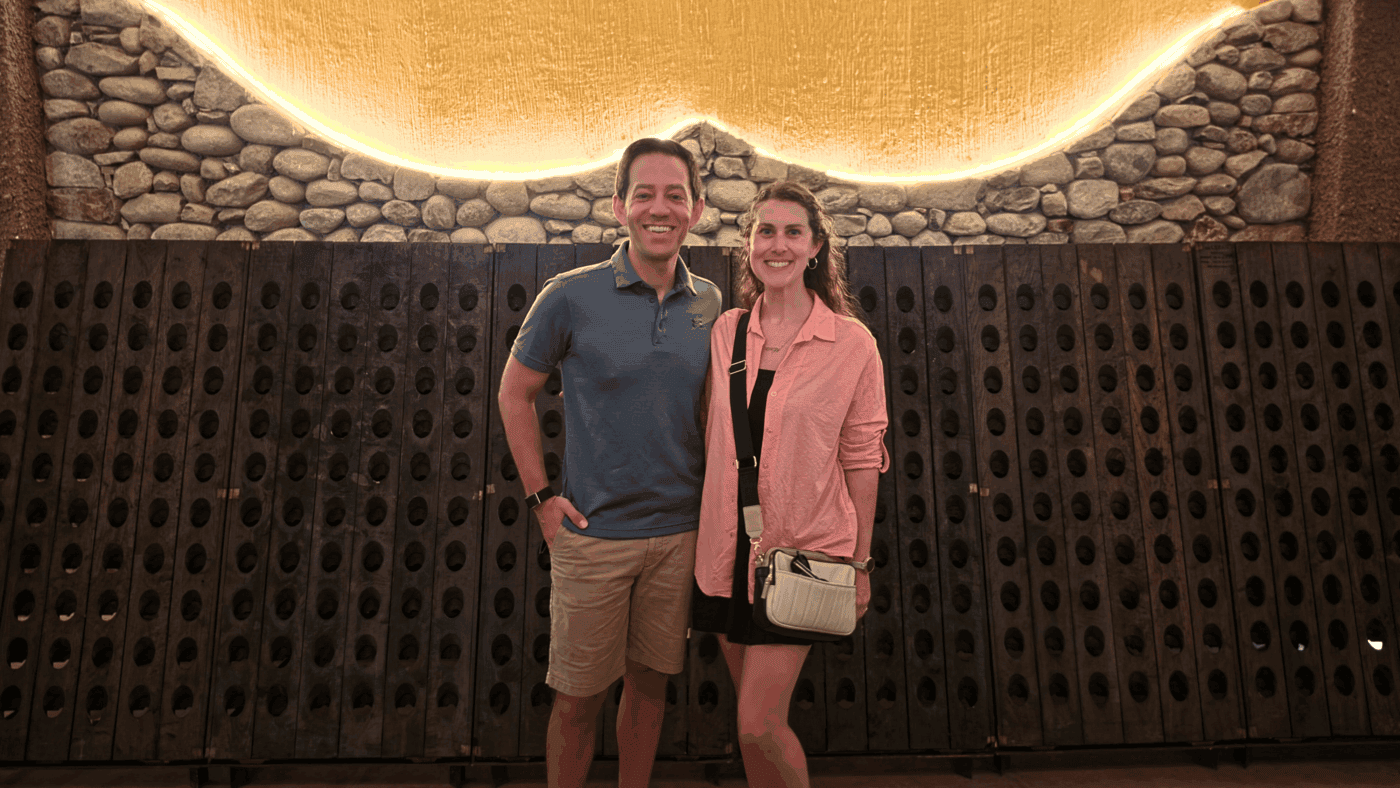
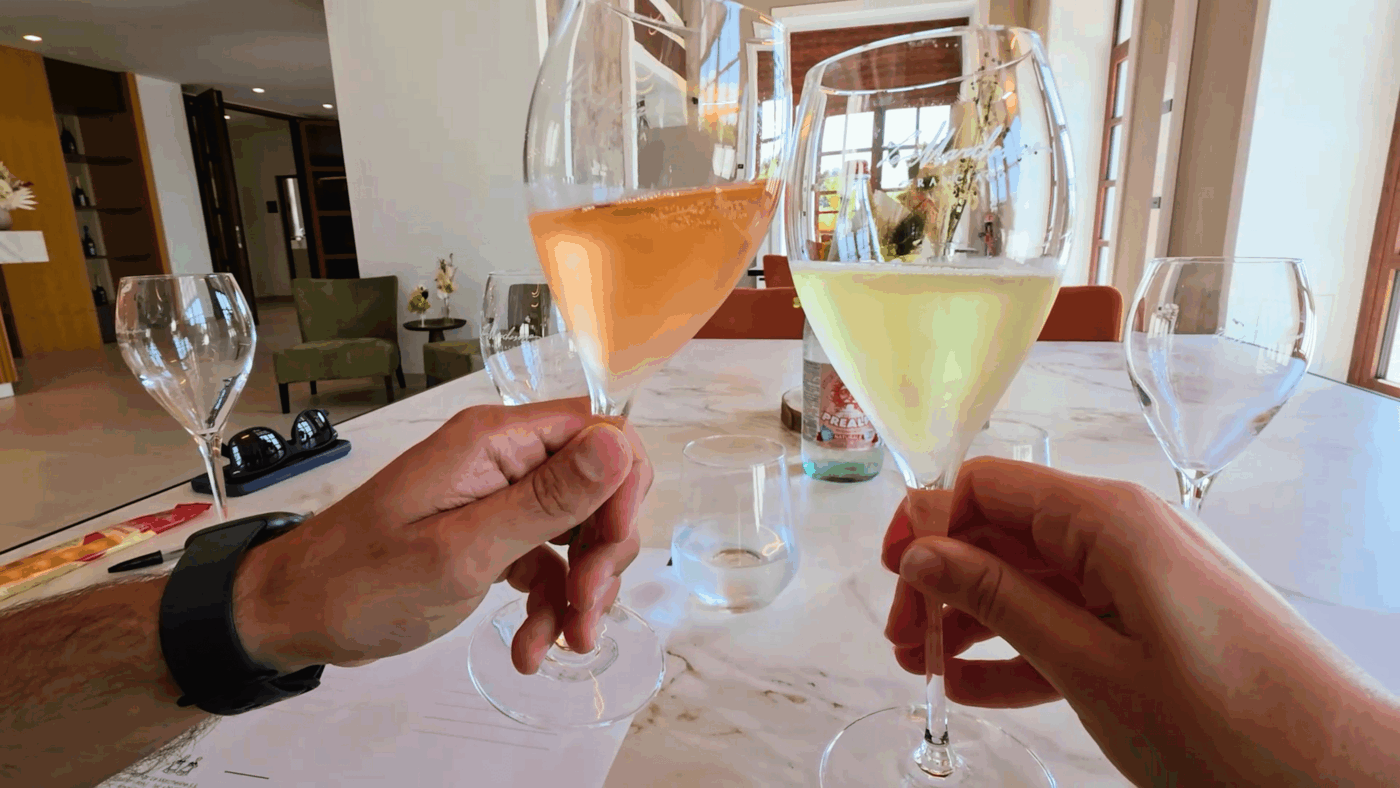
After 4 days and 6 wineries, we finally understand why this place keeps coming up in conversation with locals here.
Part of it is that every estate has its own interpretation of what Franciacorta can be. We expected more uniformity and got far more variety than we’d planned for, and we never had a bad tasting. While the other part of it is the region itself: the lake, the mountains, the roads, the villages, all of it working together.
If there’s one thing to take away, it’s this: Franciacorta is not Italy’s answer to Champagne. It’s its own thing entirely, and it deserves to be on your radar.
Ready to get your drink on in Italy? We’ve got a bunch of guides or browse some popular ones below:
- Barolo Wine Tasting in Piedmont, La Morra
- A Quick Guide to Italian Wine classification – DOCG, DOC, and more explained
- Ultimate Road Trip to Tuscany: A Wine Lover’s Paradise
- The Best Wine Bars in Bologna, Italy
Ready to visit Italy? Read hotel reviews on TripAdvisor then book your room here!
Don’t forget to pick up a travel guidebook for your other adventures.
Love this guide? Have questions? Get in touch with us on Facebook | YouTube | Instagram | Pinterest